

Introduction:
As we step into 2026, understanding the 2026 tax brackets is critical for anyone hoping to plan their finances for the year ahead. Tax planning is one of the most important aspects of personal finance, and the 2026 tax brackets will play a major role in determining how much tax you owe or how much you can save. Tax laws can change frequently, and understanding these changes allows you to adjust your tax strategy accordingly.
In this post, we’ll take a deep dive into the 2026 tax brackets, how they might change from previous years, and how you can use this information to minimize your tax burden. Whether you’re a working professional, a small business owner, or a retiree, this guide will walk you through everything you need to know about the 2026 tax brackets.
What Are Tax Brackets?
Before we dive into the specifics of the 2026 tax brackets, it’s important to understand what tax brackets are and how they work. Tax brackets refer to income ranges that determine the rate at which income will be taxed. Each bracket has a specific tax rate, and as your income increases, you may move into a higher tax bracket. However, this doesn’t mean that all your income is taxed at that higher rate. Instead, the income in each bracket is taxed at the rate for that specific range.
For example, if you make $50,000 in taxable income, the first portion of your income may be taxed at the lower rate, and the remainder at a higher rate, depending on the tax bracket thresholds.
Understanding the structure of the 2026 tax brackets can help you forecast your potential tax liabilities and plan accordingly.
How Will the 2026 Tax Brackets Change?
As we look toward the 2026 tax brackets, it’s essential to recognize that tax laws can shift due to new policies, economic conditions, and government decisions. Let’s take a closer look at some of the changes we might expect to see in 2026:
-
Inflation Adjustments:
Tax brackets are usually adjusted for inflation every year. These adjustments ensure that tax brackets reflect the increased cost of living. For example, the IRS adjusts the tax brackets each year based on the inflation rate, so in 2026, we might see the 2026 tax brackets increased to account for inflation.Historically, inflation adjustments have resulted in higher thresholds for each tax bracket. This means that more of your income may be taxed at lower rates, which can be beneficial for most taxpayers.
- Possible Tax Rate Changes:
The 2026 tax brackets could also see a shift in tax rates. Although no official proposals have been finalized, there have been discussions about changing tax rates for different income groups. For example, it’s possible that tax rates could be reduced for middle-class earners or raised for higher-income individuals. These changes could significantly impact your overall tax liabilities in 2026. - Standard Deduction Changes:
In addition to changes in tax rates, the standard deduction could increase in 2026. If the standard deduction is increased, taxpayers will have more of their income shielded from taxation, which could reduce their taxable income and lower their overall tax bill. The standard deduction is especially beneficial for those who do not itemize deductions. - Expansion of Tax Credits and Deductions:
As the 2026 tax brackets evolve, there could be a variety of new tax credits and deductions introduced. For example, we might see a continued expansion of credits for low- and middle-income taxpayers. These changes would provide tax relief and could encourage individuals and families to invest in retirement savings, education, and health care.
The Projected 2026 Tax Brackets
Although the IRS hasn’t released the official 2026 tax brackets yet, we can anticipate the following approximate adjustments based on the inflation rate and past trends. Here’s an example of what the 2026 tax brackets might look like for single filers:
| Income Range (Single) | Tax Rate (2026) |
|---|---|
| Up to $10,000 | 10% |
| $10,001 to $40,000 | 12% |
| $40,001 to $85,000 | 22% |
| $85,001 to $165,000 | 24% |
| $165,001 to $250,000 | 32% |
| $250,001 to $500,000 | 35% |
| Over $500,000 | 37% |
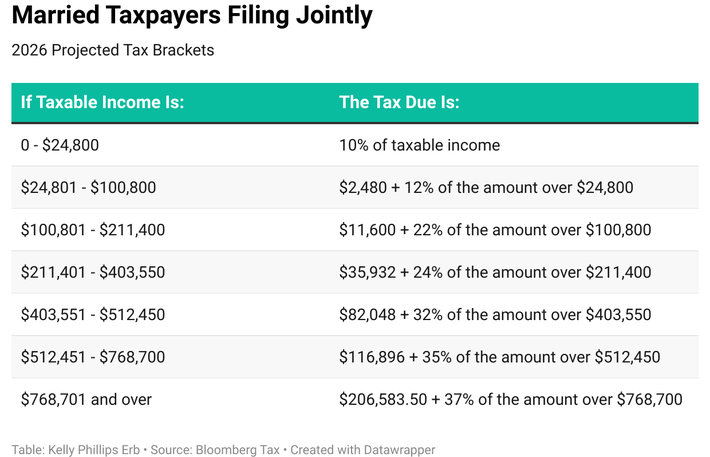
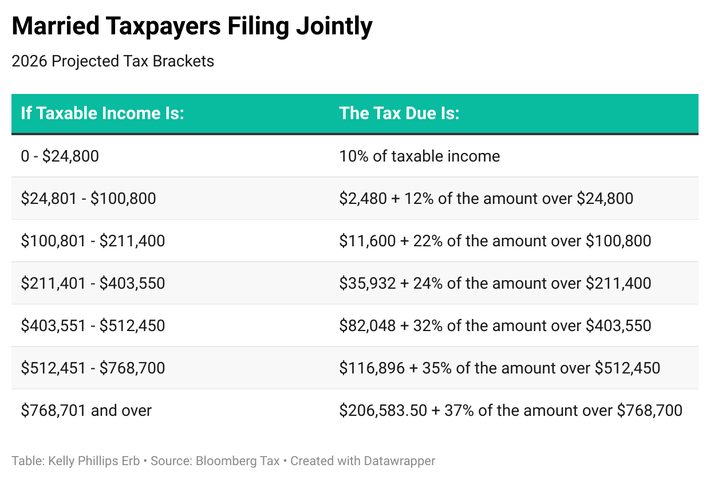
For married couples filing jointly, the income ranges for the 2026 tax brackets will likely be approximately double those for single filers.
How the 2026 Tax Brackets Will Affect You
Understanding the impact of the 2026 tax brackets on your taxes depends largely on your income level, filing status, and overall financial situation. Here’s how the 2026 tax brackets may affect different groups:
- Low-Income Taxpayers:
Lower-income earners are expected to see some relief from the 2026 tax brackets. The adjustments for inflation will likely move more income into the lower tax rates, allowing many low-income individuals to pay a lower percentage of their income in taxes. Additionally, any increases in the standard deduction or expansion of tax credits will provide further tax relief. - Middle-Class Taxpayers:
The middle class may see a moderate change in their tax liabilities with the 2026 tax brackets. Although the inflation adjustments could lower the overall tax rate on middle-income earners, the potential for tax reforms targeting higher earners could impact tax policy for the middle class as well. Understanding how the 2026 tax brackets will change and adjusting withholding or deductions accordingly will be key. - High-Income Earners:
High-income earners may not see drastic changes in their tax rate under the 2026 tax brackets, but they should be aware of other potential shifts in tax policy, such as changes in capital gains tax rates, dividend taxation, and the potential for a surtax on very high incomes. Planning for the 2026 tax brackets will be especially important for those in the top income tiers.
Tax Strategies to Maximize Savings in 2026
As we approach 2026, it’s wise to start thinking about tax planning strategies that can help reduce your taxable income and maximize your savings under the 2026 tax brackets. Here are some tips:
- Maximize Retirement Contributions:
Contributing to retirement accounts such as a 401(k), IRA, or Roth IRA is one of the best ways to reduce your taxable income. For 2026, consider contributing the maximum allowable amount to these accounts to lower your taxable income and reduce your overall tax liability. - Consider Tax-Advantaged Accounts:
Health Savings Accounts (HSAs), Flexible Spending Accounts (FSAs), and 529 education savings plans are all tax-advantaged accounts that can help reduce your taxable income. These accounts allow you to save for medical expenses, education, or other specific purposes while reducing your tax bill. - Take Advantage of Deductions and Credits:
Don’t forget to take advantage of tax deductions and credits available to you in 2026. The child tax credit, earned income tax credit, and deductions for student loan interest are just a few of the options available to many taxpayers. Make sure to consult with a tax professional to ensure you’re taking full advantage of these opportunities. - Adjust Your Withholding:
If you expect to be in a higher tax bracket in 2026, consider adjusting your withholding throughout the year. By increasing the amount of tax withheld from your paycheck, you can avoid a large tax bill at the end of the year and potentially avoid underpayment penalties.
Key Considerations for Small Business Owners
Small business owners should also be aware of the 2026 tax brackets and how they will impact their taxes. In addition to personal tax brackets, small business owners must consider the tax implications of their business structure (sole proprietorship, LLC, corporation, etc.).
For example, if you are a business owner, you may qualify for the Qualified Business Income (QBI) deduction, which can allow you to deduct a portion of your business income. This can be especially valuable if you’re operating in a higher tax bracket in 2026. Additionally, the impact of any changes to corporate tax rates or deductions available to business owners should be considered in your tax planning strategy.
Final Thoughts
In conclusion, understanding the 2026 tax brackets is crucial for anyone who wants to optimize their tax strategy. While much of the information is still subject to change, it’s clear that planning for the 2026 tax brackets can provide substantial savings for most taxpayers. By staying informed about potential changes and taking action to maximize your deductions, credits, and retirement contributions, you can reduce your tax liabilities and keep more of your income.
Don’t wait until 2026 to start planning your taxes! Now is the time to review your financial situation, consult with a tax professional, and take steps to ensure that you’re fully prepared for the changes in the 2026 tax brackets.
By making smart tax decisions now, you can secure a more financially stable future and potentially save thousands of dollars in taxes.
