

IRS Form 1040:
When tax season rolls around, one of the most important forms that U.S. taxpayers encounter is the IRS Form 1040. Whether you’re a first-time filer or a seasoned taxpayer, understanding the ins and outs of this form is crucial to ensuring your tax filing goes smoothly. At Syed Professional Services, we are committed to helping you navigate the complexities of tax, accounting, and immigration matters, and we’ve created this comprehensive guide to explain IRS Form 1040 in detail.
In this blog post, we’ll cover everything you need to know about IRS Form 1040 – from what it is, who needs to file it, how to complete it, and some common mistakes you should avoid. Let’s dive in!
What is IRS Form 1040?
IRS Form 1040 is the standard federal income tax form used by U.S. taxpayers to file their annual tax returns with the Internal Revenue Service (IRS). The form provides a detailed summary of your income, deductions, and credits for the year, and it helps determine whether you owe taxes or are entitled to a refund.
The IRS Form 1040 is used by individuals to report all sources of income, including wages, dividends, interest, capital gains, and business income. It’s also used to claim various tax credits and deductions, including the standard deduction, itemized deductions, and tax credits such as the Child Tax Credit or the Earned Income Tax Credit (EITC).
Who Needs to File IRS Form 1040?
Most U.S. citizens and residents who earn income during the year are required to file IRS Form 1040. However, there are exceptions depending on factors like income level, filing status, and age. You must file if:
- Your income exceeds a certain threshold (which varies based on your filing status and age).
- You are self-employed or have business income.
- You owe taxes due to self-employment, rental income, or other sources.
- You want to claim a refund for overpaid taxes.
Even if you don’t meet these requirements, it might still be beneficial to file IRS Form 1040. For example, if you qualify for a tax credit, you could receive a refund by filing the form.
Key Sections of IRS Form 1040
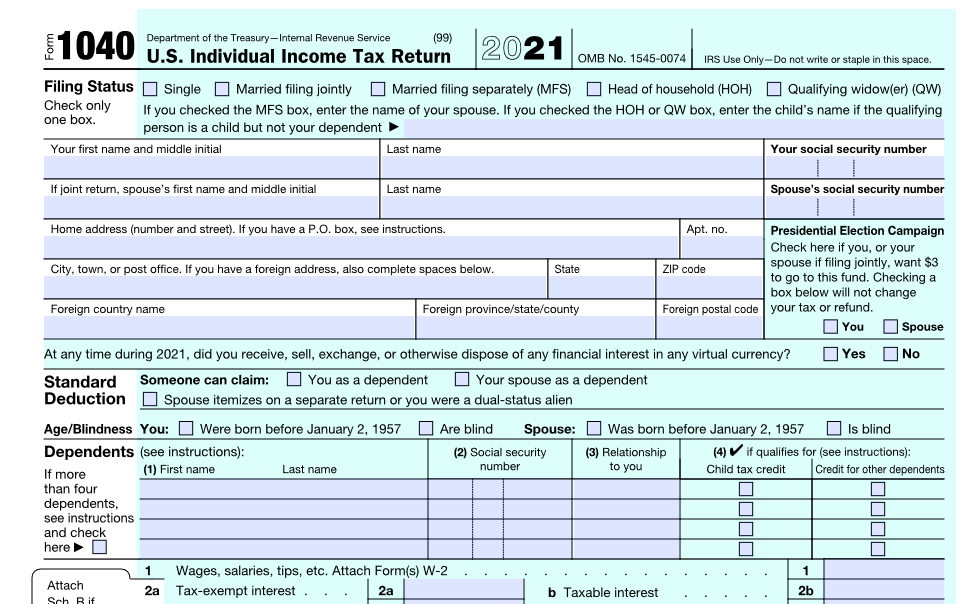
The IRS Form 1040 consists of several important sections. Here’s an overview of the most critical parts:
- Personal Information: In this section, you will fill out your name, address, Social Security number, and filing status. This is where you will also list dependents if applicable.
- Income: You will report all sources of income, including wages, business profits, rental income, and dividends. This section helps calculate your total taxable income.
- Adjustments to Income: Here, you can deduct certain expenses like student loan interest, retirement contributions, and health savings account contributions.
- Tax and Credits: This section helps you calculate how much tax you owe based on your taxable income. It also allows you to claim credits like the Child Tax Credit or the Earned Income Tax Credit.
- Other Taxes: In some cases, you may owe additional taxes, such as self-employment tax or the alternative minimum tax (AMT).
- Payments: If you’ve had taxes withheld from your paycheck or made estimated payments, they will be reported here. This section will help determine if you owe additional taxes or if you’re entitled to a refund.
- Refund or Amount Owed: Finally, this section will show whether you have a refund coming or if you owe additional taxes. If you owe, the form will give you instructions on how to pay.
How to Complete IRS Form 1040
Completing IRS Form 1040 can seem daunting, but with the right guidance, it becomes much more manageable. Here’s a step-by-step process to help you through the filing process:
- Gather Your Documents: Before filling out the form, collect all your financial documents, including W-2 forms, 1099 forms, and any other income statements. If you’re claiming deductions, make sure you have receipts and records of your expenses.
- Choose Your Filing Status: Determine your filing status, which could be Single, Married Filing Jointly, Married Filing Separately, Head of Household, or Qualifying Widow(er). Your filing status will impact your tax rates and deductions.
- Report Your Income: Enter all your income on the form, including wages, business income, interest, and dividends. Be sure to check your W-2s, 1099s, and other income statements to ensure accuracy.
- Apply Deductions and Credits: Determine if you will take the standard deduction or itemize your deductions. If you’re eligible for any tax credits, such as the Child Tax Credit or the EITC, be sure to include them on the form.
- Double-Check for Errors: One of the most common mistakes people make when filing IRS Form 1040 is simple errors. Double-check your math, Social Security numbers, and other critical information to avoid issues.
- File Your Return: Once your IRS Form 1040 is complete, you can file it electronically (e-file) or by mail. E-filing is faster and helps reduce the chances of mistakes, as the IRS will automatically check for errors.
Common Mistakes to Avoid When Filing IRS Form 1040
Filing your IRS Form 1040 correctly is crucial to avoid delays and penalties. Here are some of the most common mistakes people make and how to avoid them:
- Missing or Incorrect Social Security Numbers: Ensure the Social Security numbers for yourself, your spouse (if applicable), and any dependents are correct. Mistakes in this section can cause delays in processing your return.
- Incorrect Filing Status: Choose the correct filing status, as it directly affects your tax rates and deductions. Filing status errors are common, especially when people are unsure about whether they qualify as Head of Household or Married Filing Separately.
- Failing to Report All Income: It’s essential to report all income, including self-employment income, investment income, and rental income. Failing to report income can lead to audits and penalties.
- Neglecting to Claim Deductions or Credits: Many taxpayers miss out on valuable deductions and credits because they don’t know they qualify. Be sure to review all available tax breaks to minimize your tax liability.
- Not Double-Checking Your Numbers: Simple math errors are one of the easiest mistakes to make when filling out IRS Form 1040. Always double-check your calculations, and consider using tax software to reduce errors.
- Not Signing and Dating the Return: An unsigned or undated return is invalid, so make sure you sign and date the form before submitting it.
Should You Hire a Tax Professional to File IRS Form 1040?
If you find the process of filing IRS Form 1040 overwhelming, or if your tax situation is complicated, hiring a tax professional might be a good option. A professional can ensure your form is filled out correctly, help you identify tax credits and deductions, and provide valuable guidance on reducing your tax liability.
At Syed Professional Services, we specialize in tax, accounting, and immigration services, and our team of experts can help you file IRS Form 1040 accurately and on time. Contact us today for personalized assistance.
Conclusion
Filing IRS Form 1040 is a critical part of your annual tax process. Understanding how to complete the form, avoid common mistakes, and make the most of deductions and credits can save you money and ensure a smooth filing experience. Whether you’re filing for the first time or need help with more complex tax situations, Syed Professional Services is here to guide you every step of the way.
If you need help with your IRS Form 1040 or have any questions, don’t hesitate to reach out to us. We’re here to make tax season easier for you.

