

A Step-by-Step Guide
The naturalization process is one of the most important milestones in an immigrant’s journey to becoming a U.S. citizen. It is a legal process that allows eligible immigrants to apply for U.S. citizenship, granting them the same rights and privileges as those born in the country. However, the naturalization process can be complex, with specific eligibility requirements, forms to fill out, and steps to follow. Understanding the ins and outs of this process is crucial to ensure that your application is successful.
In this comprehensive guide, we will walk you through every step of the naturalization process, from determining if you are eligible, to completing the application, to preparing for the citizenship interview. Whether you are just starting your journey toward U.S. citizenship or you are looking for more detailed information about the next steps, this guide will provide everything you need to know.
What is the Naturalization Process?
The naturalization process is the procedure through which a foreign national becomes a U.S. citizen. It is available to lawful permanent residents (green card holders) who meet specific eligibility criteria set by the U.S. Citizenship and Immigration Services (USCIS). The process involves several steps, including submitting an application, attending an interview, and passing a citizenship test.
Eligibility for the Naturalization Process
Before you begin the naturalization process, it is essential to determine if you meet the eligibility requirements. The USCIS has outlined the following key criteria:
-
Age: You must be at least 18 years old.
-
Permanent Resident Status: You must have been a lawful permanent resident (green card holder) for at least five years, or three years if you are married to a U.S. citizen.
-
Continuous Residence: You must have lived continuously in the U.S. for at least five years (three years if married to a U.S. citizen).
-
Physical Presence: You must have been physically present in the U.S. for at least half of the required residency period.
-
Good Moral Character: You must demonstrate good moral character by following U.S. laws and regulations.
-
English Language Proficiency: You must be able to read, write, and speak basic English.
-
Knowledge of U.S. History and Government: You must pass a civics test that assesses your knowledge of U.S. history, government, and the Constitution.
If you meet these requirements, you can begin the naturalization process. If not, you may need to wait until you fulfill all the necessary criteria before applying.
The Steps of the Naturalization Process
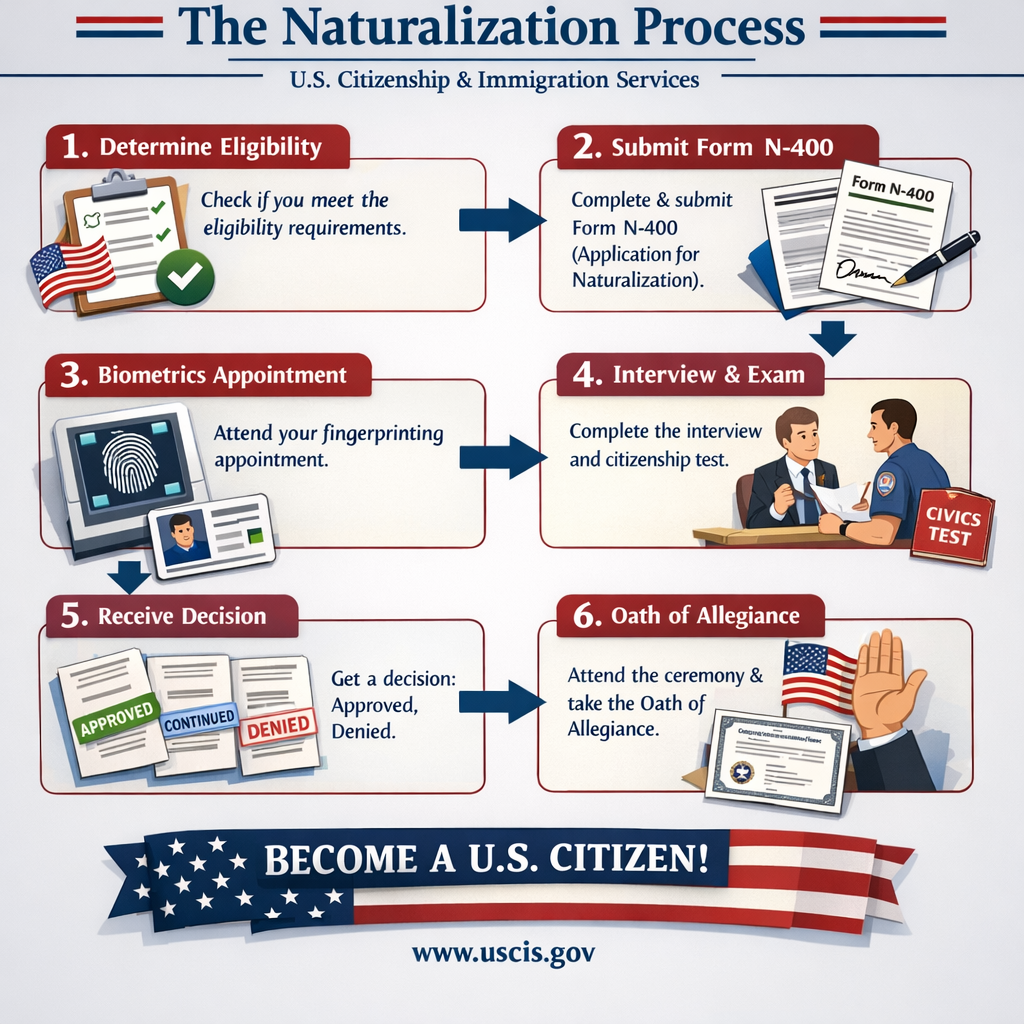
The naturalization process can seem daunting, but by breaking it down into manageable steps, you can approach it with confidence. Here is a detailed overview of the steps involved in becoming a U.S. citizen:
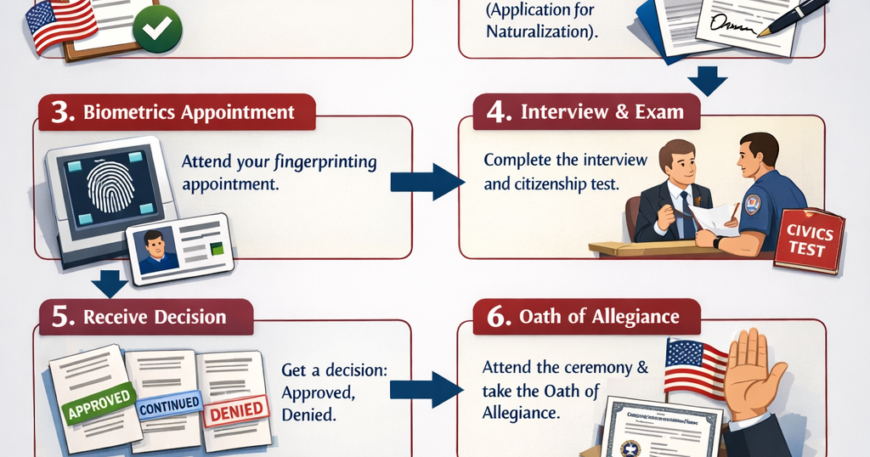
1. Submit Form N-400, Application for Naturalization
The first step in the naturalization process is to complete Form N-400, the application for naturalization. This form requests personal information, details about your background, and your eligibility for naturalization. You will also need to provide documents such as:
-
A copy of your green card
-
Proof of your marriage (if applying based on marriage to a U.S. citizen)
-
Evidence of continuous residence and physical presence in the U.S.
-
Passport-style photos
-
Any other documents that support your application
Once you have completed the form and gathered all necessary documents, submit the application to USCIS along with the filing fee. The current fee for Form N-400 is $725, which includes both the application fee and the biometric services fee.
2. Biometrics Appointment
After submitting your Form N-400, USCIS will schedule a biometrics appointment for you. At this appointment, you will have your fingerprints, photo, and signature taken for background checks. This step is necessary for USCIS to conduct a criminal background check and verify your identity. It typically takes place a few weeks after submitting your application.
3. Wait for USCIS to Process Your Application
Once you’ve completed the biometrics appointment, USCIS will begin processing your application. The processing time can vary depending on the workload of the USCIS office handling your case, but on average, it can take between 6 and 12 months to complete. During this time, USCIS may request additional documentation or information if needed.
4. Attend the Naturalization Interview
Next, you will be scheduled for a naturalization interview, which is one of the most important parts of the naturalization process. At this interview, a USCIS officer will review your Form N-400, ask you questions about your background, and test your knowledge of English and U.S. history. The interview will consist of:
-
English Test: You will be asked to read, write, and speak basic English.
-
Civics Test: You will be asked up to 10 questions about U.S. history and government. You must answer at least six questions correctly to pass.
If you pass both the English and civics tests, the USCIS officer will proceed to review the rest of your application. If everything is in order, they will recommend that you be approved for naturalization.
5. Receive a Decision on Your Application
After your interview, you will receive a decision on your application. There are three possible outcomes:
-
Granted: Your application is approved, and you will be scheduled for a naturalization ceremony.
-
Continued: Your case is put on hold, and you may be asked to provide additional information or documents.
-
Denied: Your application is rejected, usually due to a failure to meet eligibility requirements.
If your application is granted, you will move on to the final step of the naturalization process.
6. Take the Oath of Allegiance
The final step in the naturalization process is to attend a naturalization ceremony and take the Oath of Allegiance. This is a ceremonial event where you formally pledge your allegiance to the United States and renounce your allegiance to any foreign countries. Once you take the oath, you will be officially sworn in as a U.S. citizen.
After the ceremony, you will receive your Certificate of Naturalization, which serves as proof of your U.S. citizenship. From this point forward, you will enjoy all the rights and privileges of being a U.S. citizen, including the right to vote, apply for a U.S. passport, and sponsor family members for immigration.
Challenges in the Naturalization Process
While the naturalization process is straightforward for many applicants, it is not without its challenges. Some of the common difficulties include:
-
Delays in processing: Due to high demand and a backlog of applications, the naturalization process can take longer than expected.
-
Complex eligibility requirements: Some applicants may have difficulty meeting the residency, moral character, or language requirements.
-
Denials and rejections: If an applicant fails to meet the necessary criteria or provides incomplete or inaccurate information, their application may be denied.
If you encounter any challenges during the naturalization process, it is important to seek professional advice from an immigration expert or attorney to help guide you through the process.
Conclusion
The naturalization process is a life-changing journey that allows immigrants to become U.S. citizens and enjoy the rights and benefits that come with citizenship. By understanding the requirements, steps, and challenges of the process, you can navigate the path to citizenship with confidence. If you are ready to begin the naturalization process, or if you need assistance with your application, Syed Professional Services is here to help. Contact us today for expert guidance and support as you take the next step toward becoming a U.S. citizen.

