
9 Essential i9 form Best Practices to Avoid Costly Errors and Build Smooth Hiring
Federal law requires employers to verify the identity and employment authorization of people they hire in the United States, and USCIS has also published recent Form I-9 updates, including a newer version employers should begin using on August 1, 2026. This article is for general informational purposes and should not be treated as legal advice for a specific case.
Hiring a new employee should feel like progress, not paperwork panic. Yet for many businesses, one small onboarding step creates outsized stress: the i9 form. Business owners hear the term all the time, but they often don’t realize how easy it is to make a technical error that later turns into an audit issue, a document problem, or a compliance headache. The good news is that the process is manageable once you understand the rules and build a repeatable system.
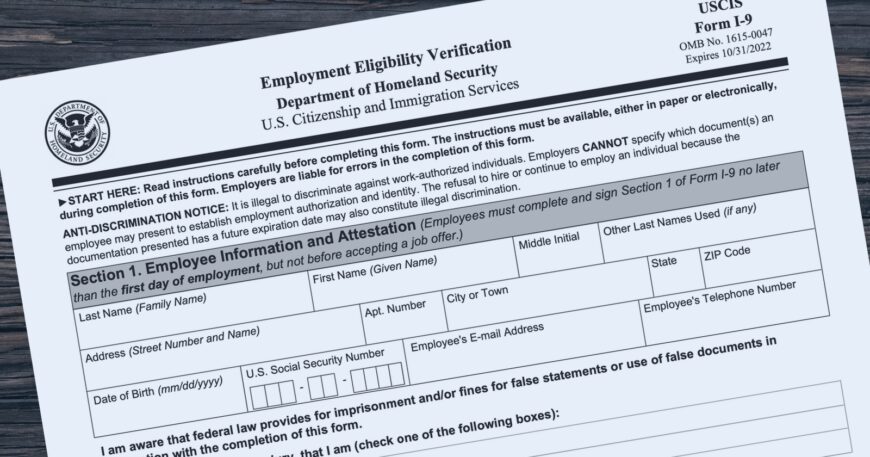
The official name is Form I-9, Employment Eligibility Verification, though many employers and employees search online for it as the i9 form. Its purpose is straightforward: employers must verify that each new hire is both who they say they are and authorized to work in the United States. USCIS also states that employers must complete and retain a Form I-9 for covered hires, and employee rights guidance makes clear that workers must receive the full form, instructions, and Lists of Acceptable Documents.
For a business like Syed Professional Services, this topic matters because it sits at the intersection of tax, accounting, payroll, and immigration compliance. A clean onboarding record supports accurate payroll setup, stronger internal controls, and smoother HR operations. A sloppy file, on the other hand, can create avoidable risk. Let’s walk through how the process works, where employers go wrong, and how to handle the i9 form with more confidence.
i9 form: what it is and why it matters
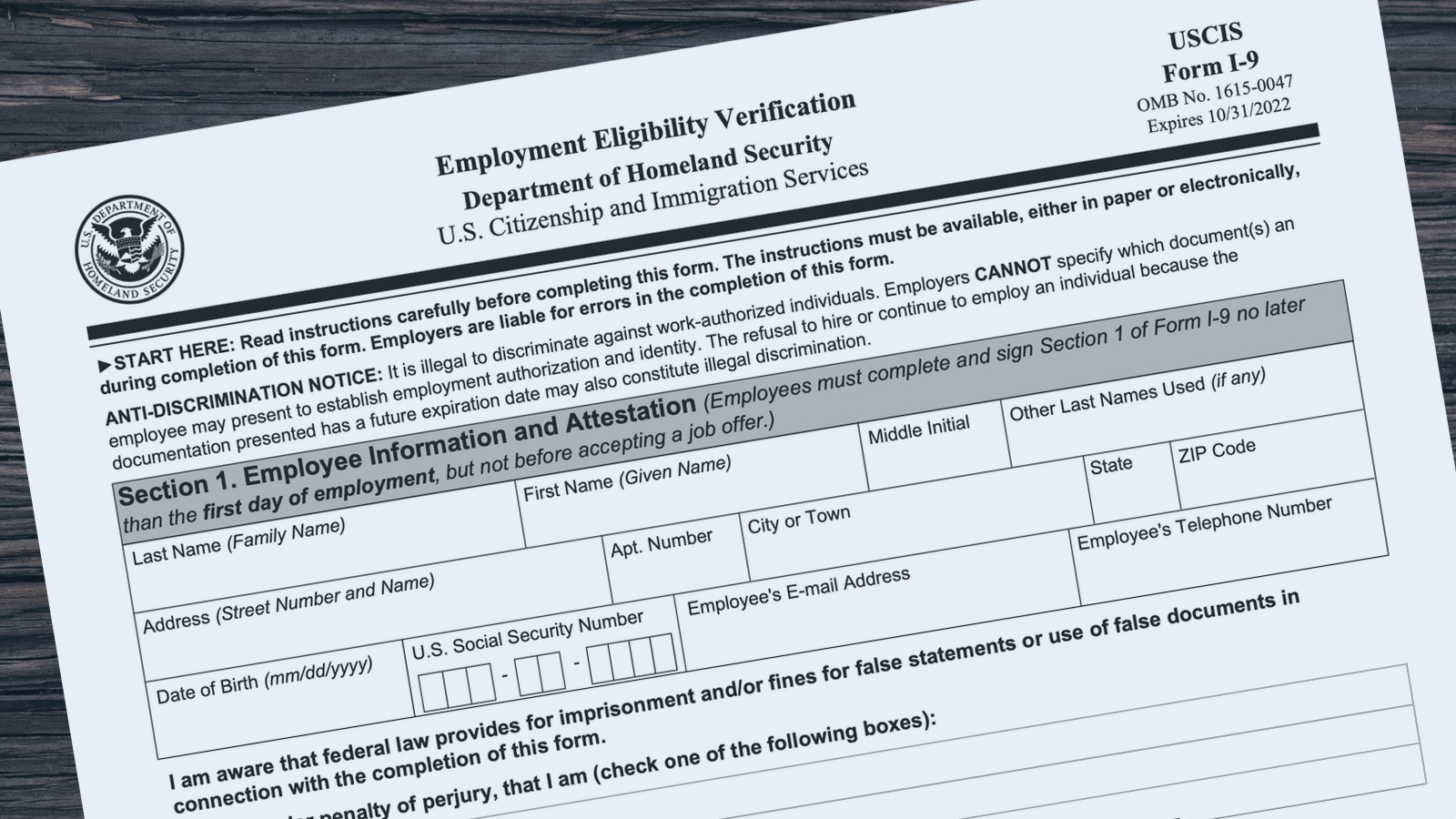
At its core, the i9 form is the federal employment eligibility verification document used for most U.S. hires. USCIS says employers must complete the form each time they hire a person to perform labor or services in the United States in return for wages or other remuneration. The legal framework applies broadly to employees hired on or after November 6, 1986, which is why the form is such a standard part of modern onboarding.
That may sound simple, but the form carries real weight. It is not just another HR sheet that gets buried in a file cabinet. It is a compliance document that can be reviewed by the government, and it is one of the first things businesses should get right when they bring on staff. If you are a startup hiring your first employee, a restaurant adding seasonal workers, a professional office growing its team, or a family business formalizing payroll, the i9 form belongs on your must-do list.
There is another reason it matters: the form is technical. Employers are expected to review documentation, complete the right sections on time, keep records properly, and avoid discriminatory practices while doing it. That combination is where many companies stumble. They don’t mean to cut corners; they simply move too fast, use an outdated version, or fail to train the person handling onboarding. As USCIS continues to update guidance and form versions, accuracy matters even more than ever. Recent USCIS notices confirm minor Form I-9 changes in 2025 and a newer form version that employers should start using on August 1, 2026.
Who must complete an i9 form and when
One of the most common questions employers ask is who actually completes the i9 form. The answer is: both the employee and the employer have responsibilities. The employee completes Section 1, while the employer reviews documentation and completes Section 2. USCIS guidance says Section 1 must be completed no later than the employee’s first day of employment, and Section 2 generally must be completed no later than the third business day after the employee starts work for pay. If the hire will work for less than three business days, Sections 1 and 2 must be completed by the first day of employment.
That timeline is where timing mistakes often begin. Maybe the employee starts quickly, the manager is busy, or payroll is processed before the paperwork is fully verified. Those little delays can add up to a serious recordkeeping problem. A smart employer treats the i9 form as part of the same-day or first-day onboarding workflow, not as an afterthought.
It is also important to understand that the employer cannot tell the employee which acceptable document to present. USCIS says the employee chooses which document or combination of documents to provide from the Lists of Acceptable Documents, and the employer must accept documents that reasonably appear genuine and relate to the employee. Employee-rights guidance also says the employer must provide the entire form, including instructions and the Lists of Acceptable Documents.
This is where businesses need a balanced approach. You do need complete records, but you also need a consistent, nondiscriminatory process. Don’t ask for more documents than necessary. Don’t reject valid-looking documentation because it is unfamiliar. Don’t create different rules for citizens and noncitizens. In other words, the i9 form is not only about paperwork accuracy; it is also about fair and lawful hiring practices.
How to complete an i9 form correctly
The best way to complete an i9 form correctly is to break the process into a few repeatable steps. First, give the employee the full form and instructions on or before the first day. Second, make sure Section 1 is completed properly and signed on time. Third, review the employee’s original documentation for Section 2 within the legal deadline. USCIS guidance also states that when physically examining documents, copies are not acceptable, except for certified copies of birth certificates.
A practical workflow helps a lot. Before the first day, send a welcome email with onboarding instructions. On day one, confirm the employee completed Section 1. Then assign one trained person, whether that is HR, payroll, or an office manager, to review documents and complete Section 2. The more people who “sort of know” the rules, the easier it is for inconsistencies to creep in. One trained workflow is usually better than five improvised ones.
Employers should also remember that a receipt may sometimes be acceptable for a short period instead of the final document. USCIS says acceptable receipts can be used in certain situations, such as when a document was lost, stolen, or damaged, but they are only valid for a limited time and must be handled according to the rules. That means you cannot simply file the receipt and forget it. You need a follow-up system to obtain the replacement document before the receipt period expires.
Another key point is reverification. Not every employee requires it, but USCIS guidance explains that employers use Supplement B in certain reverification and rehire situations. If an employee’s work authorization requires later reverification, the employer needs a calendar-based follow-up process so that nothing slips through the cracks.
This is why the i9 form should never live in isolation from the rest of your back office. It should connect to hiring, payroll, employee files, and internal reminders. A well-run business doesn’t just fill out the i9 form once; it builds a process around it. That’s what turns compliance from stressful to sustainable.
Common i9 form mistakes that trigger costly problems
Most employers do not get into trouble because they intended to break the rules. They get into trouble because they made preventable mistakes. The most common i9 form errors include using an outdated form version, missing a signature, leaving a required field blank, reviewing documents late, recording the wrong document information, keeping files in a disorganized way, or failing to follow up on reverification when required. USCIS form updates show why version control matters, especially with changes already announced for 2026.
Another frequent mistake is overdocumenting. Employers sometimes ask workers to provide specific documents, or more documents than the rules require, because they think extra paperwork equals extra protection. It doesn’t. USCIS guidance says the employee must choose which acceptable document or combination of documents to present. Asking for the wrong thing can create discrimination risk on top of compliance risk.
Then there is the file-management problem. Some businesses store the i9 form in a general personnel file, some keep it in payroll, and some scatter records across email, scans, and paper folders. That’s a recipe for confusion. When records are inconsistent, it becomes harder to show that your process is complete, timely, and organized. Even worse, if a business grows quickly, sloppy systems multiply right along with headcount.
There is also a human side to this. A rushed manager may forget a date. An employee may accidentally check the wrong attestation box. Someone may accept a copy when an original should have been reviewed. None of these errors feels dramatic in the moment. But together, they create exactly the kind of messy compliance picture employers want to avoid. A simple internal audit of every i9 form on file can reveal patterns early and save a lot of trouble later.
How long should employers keep an i9 form
Retention is one of the easiest rules to explain and one of the easiest to overlook. USCIS and ICE guidance state that employers must retain a Form I-9 for each person they hire for three years after the date of hire, or one year after employment ends, whichever is later. That “whichever is later” language is the part many employers forget, but it makes all the difference.
Think of it this way: the right retention date is not the same for every employee. A long-term worker and a short-term worker may have very different destruction timelines. If you destroy records too early, you may not have what you need if questions arise later. If you keep everything forever without a policy, your files become bloated and hard to manage. Good retention is about control, not clutter.
That is why every i9 form should have a retention date tracked somewhere reliable. Many businesses use a spreadsheet, HR software, or a compliance calendar. Others outsource the process so someone knowledgeable can monitor deadlines and storage practices. Whatever method you choose, consistency matters. A strong retention system is one of the simplest ways to make your compliance posture look more professional and more credible.
How E-Verify relates to the i9 form
A lot of employers assume E-Verify replaces the i9 form. It does not. Official USCIS and E-Verify guidance explains that E-Verify uses information taken from Form I-9 to electronically compare employee information with government records. In other words, Form I-9 comes first, and E-Verify is a separate, additional process for enrolled employers.
This distinction matters because a business can be doing one process correctly and the other poorly. If you use E-Verify, you still need a proper i9 form process. If you do not use E-Verify, you still need a proper Form I-9 process. They are related, but they are not interchangeable.
There is also an alternative remote document examination procedure available in certain situations for qualifying E-Verify employers, but it comes with specific requirements and should be followed carefully. Employers should avoid assuming that any remote onboarding shortcut is automatically allowed. When in doubt, always check the current USCIS and E-Verify guidance before changing your process.
Why small businesses benefit from a stronger i9 form process
Small businesses often think compliance problems only hit large corporations. Honestly, that’s wishful thinking. Smaller employers are often more exposed because they have fewer layers of review, less formal HR support, and more pressure to move quickly. A stronger i9 form process helps reduce risk, improve onboarding quality, and create better alignment between HR, payroll, immigration, and recordkeeping.
For a firm like Syed Professional Services, this is exactly where professional support can make a real difference. Businesses may need help choosing the right workflow, cleaning up old files, training staff, or reviewing whether their current system is consistent with official guidance. The value is not just avoiding mistakes. It is freeing up the owner or manager to focus on running the business instead of chasing missing dates, unclear scans, or half-completed records.
The smartest approach is not complicated. Use the correct form version. Train one responsible person. Build deadline reminders. Keep records organized. Review old files periodically. Escalate unusual immigration or employment authorization questions before they turn messy. Do that, and the i9 form goes from a dreaded task to a controlled business process. That’s a pretty good trade.
FAQs
What is the difference between Form I-9 and the i9 form?
There is no real difference in meaning. The official government name is Form I-9, Employment Eligibility Verification, but many people search for it online as the i9 form. The official term used by USCIS is Form I-9.
When must an employee complete the i9 form?
The employee must complete Section 1 no later than the first day of employment, according to USCIS guidance. The employer then completes Section 2 by the required deadline, usually no later than the third business day after the employee starts work for pay.
Can an employer tell a worker which documents to bring for the i9 form?
No. USCIS says the employee chooses which acceptable documentation to present from the Lists of Acceptable Documents. Employers should not demand specific documents if the employee presents acceptable choices.
Are copies of documents acceptable for Form I-9?
Generally, no. USCIS says copies are not acceptable for physical examination purposes, except for certified copies of birth certificates. Employers should review original documentation unless a specific authorized alternative procedure applies.
How long should a business keep a completed Form I-9?
The retention rule is three years after the date of hire or one year after employment ends, whichever is later. This rule is confirmed in USCIS and ICE guidance.
Does E-Verify replace the i9 form?
No. E-Verify does not replace the i9 form. It is a separate electronic verification system that uses information from Form I-9. Employers who use E-Verify still need to complete Form I-9 correctly.
Which Form I-9 version should employers use in 2026?
USCIS form updates indicate that the Form I-9 with the 08/01/23 edition date remains valid until July 31, 2026, and that starting August 1, 2026, employers should use the version with the 05/31/2027 expiration date.
Conclusion
The i9 form may look routine, but it plays a major role in lawful hiring and clean business operations. When employers understand who completes it, when deadlines apply, how documents should be reviewed, how long records must be kept, and how E-Verify fits into the picture, compliance becomes far less intimidating. The businesses that do this well are not necessarily bigger or luckier. They are simply more organized.
For Syed Professional Services, this topic is a natural fit because it touches immigration compliance, payroll accuracy, and sound back-office practice all at once. A careful, consistent process protects your business, supports your employees, and helps you grow with fewer surprises. That is the kind of administrative peace of mind every employer wants.

