
7 Devastating Urdu to English Translation Mistakes That Sabotage Your Immigration and Tax Case – Ultimate Guide
For immigrants from Pakistan and Urdu-speaking communities, the journey through U.S. immigration and tax compliance often begins with a stack of documents written in Urdu. Birth certificates, marriage certificates, affidavits, police reports, educational transcripts, business records, and income statements all need to be understood by USCIS officers, IRS reviewers, and financial institutions. That is why accurate Urdu to English translation is not a convenience—it is a legal necessity. A single mistranslated date, a name spelled inconsistently, or a missing certification can trigger a Request for Evidence, delay a green card, or create tax reporting problems that follow you for years. At Syed Professional Services, we have seen how a careless Urdu to English translation turns a straightforward case into a bureaucratic nightmare—and we have helped clients recover.
This comprehensive guide exposes seven devastating Urdu to English translation mistakes that can sabotage your immigration and tax case. You will learn what certified Urdu to English translation requires, how to avoid the most common errors, and why professional translation support is essential for anyone navigating U.S. immigration, taxation, or accounting. Whether you are filing an I-130, responding to an IRS notice, or preparing financial records for a business loan, mastering the Urdu to English translation process is non-negotiable. With Syed Professional Services as your partner—combining immigration, tax, and accounting expertise—your Urdu to English translation can become a foundation of confidence rather than a source of risk.
Why Urdu to English Translation Matters for Immigration and Tax Cases
U.S. immigration authorities require that any foreign-language document submitted as evidence be accompanied by a complete English translation. The translator must certify that the translation is accurate and that they are competent to translate from Urdu to English. A defective Urdu to English translation can cause USCIS to reject evidence, issue a Request for Evidence, or question the credibility of the entire application. For tax purposes, the IRS expects income and expense records to be reported accurately; if underlying Urdu documents are mistranslated, the resulting return may misstate income or deductions, triggering penalties or audits.
Urdu to English translation also matters for accounting and financial documentation. Immigrants who own businesses often maintain records in Urdu. Lenders, grant-makers, and immigration officers may require English versions. An inaccurate Urdu to English translation of a profit-and-loss statement or bank record can create inconsistencies that damage credibility. In short, Urdu to English translation is not a back-office task—it is a critical component of legal and financial compliance.
Mistake #1: Relying on Machine Translation for Official Documents
The most common and dangerous Urdu to English translation mistake is using free machine translation tools for official documents. Machine translation can handle simple phrases, but it cannot reliably translate names, dates, legal terminology, religious marriage formulas, or handwritten notes. It often produces literal translations that miss context, and it cannot certify accuracy. USCIS and the IRS do not accept machine-generated Urdu to English translation as evidence.
A proper Urdu to English translation for immigration or tax purposes must be performed by a qualified human translator who understands both languages and the legal context. The translator must provide a signed certification statement. Machine translation may be useful for personal understanding, but it is never acceptable for official Urdu to English translation submissions. Syed Professional Services provides certified Urdu to English translation through qualified translators who understand immigration and tax terminology.
Mistake #2: Using an Uncertified Translator
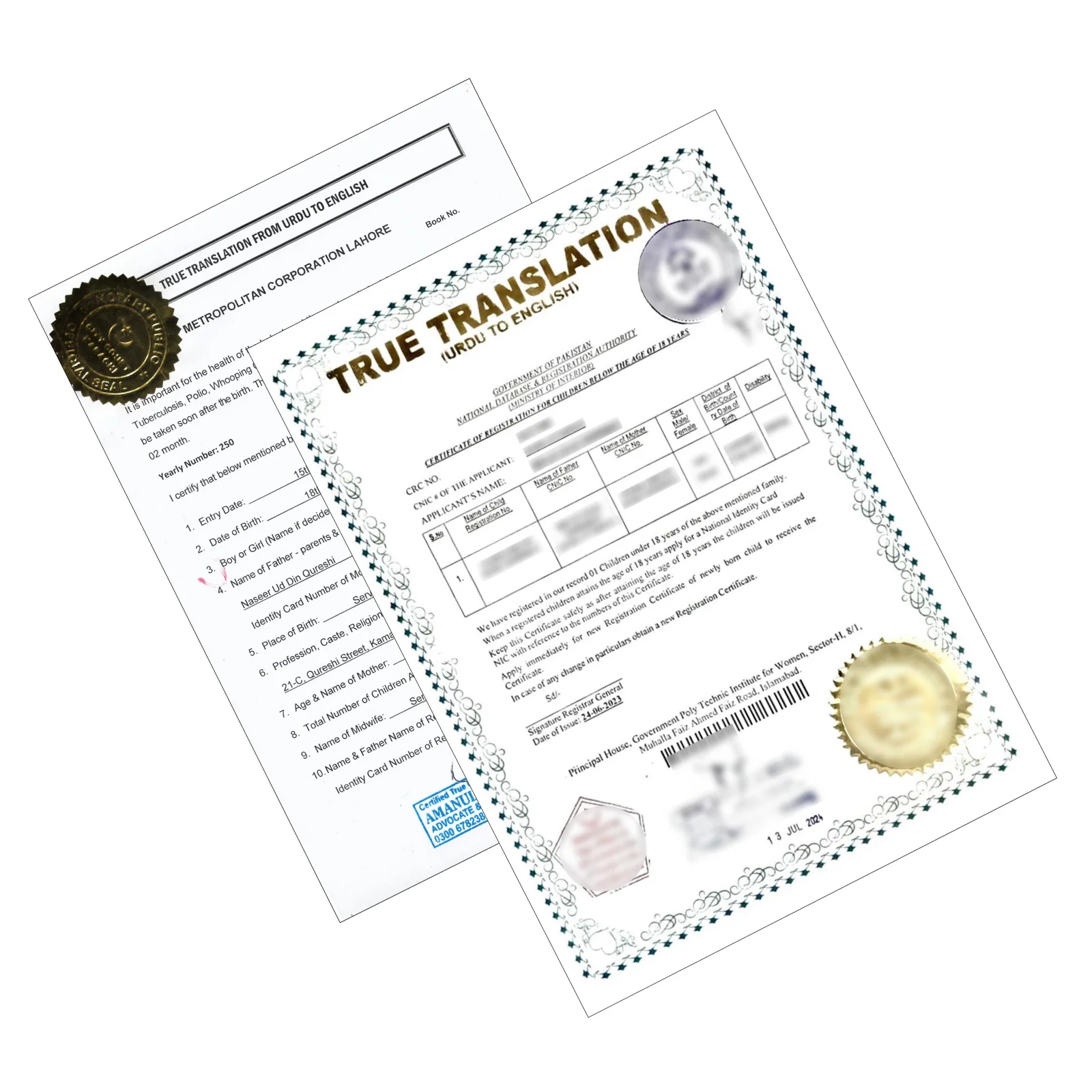
Not every bilingual person can produce a certified Urdu to English translation. USCIS requires a certification that includes the translator’s signature, printed name, address, and a statement that they are competent to translate from Urdu to English. A friend or family member may be fluent, but if their Urdu to English translation lacks the required certification, USCIS may reject it. The same applies to tax documentation submitted to the IRS or lenders.
A certified Urdu to English translation must follow a specific format and include a declaration of accuracy. The translator must be able to translate legal, medical, and financial terminology accurately. Syed Professional Services ensures that every Urdu to English translation we deliver includes the proper certification and meets the formatting requirements of the receiving agency. Do not risk your case on an uncertified Urdu to English translation—the cost of rejection is far higher than the cost of professional certification.
Mistake #3: Inconsistent Transliteration of Names
One of the most insidious Urdu to English translation errors is inconsistent transliteration of names. Urdu names can be spelled in multiple ways in English: Muhammad, Mohammed, Mohammad; Ayesha, Aisha, Aysha. If your birth certificate, marriage certificate, passport, and tax records use different spellings, USCIS may question whether they refer to the same person. An inconsistent Urdu to English translation of names can trigger identity verification issues, background check delays, and Requests for Evidence.
The solution is to establish a single, consistent spelling for every name and use it across all Urdu to English translation documents. The spelling should match your passport and prior immigration filings. If prior documents used different spellings, a professional Urdu to English translation can include a transliteration note explaining the variations. Syed Professional Services reviews name transliteration carefully in every Urdu to English translation we prepare, ensuring consistency across your immigration and tax filings.
Mistake #4: Mistranslating Dates and Calendar Systems
Urdu documents sometimes use date formats that differ from U.S. conventions, and some documents may reference the Islamic calendar alongside the Gregorian calendar. A careless Urdu to English translation can reverse day and month, mistranslate year digits, or omit the calendar system entirely. For immigration purposes, a wrong date can create timeline inconsistencies that undermine your case. For tax purposes, a mistranslated date can shift income into the wrong tax year.
Accurate Urdu to English translation requires the translator to preserve the original date while presenting it in a clear U.S. format. If both calendars appear, the Urdu to English translation should explain both. Syed Professional Services verifies every date in your Urdu to English translation against the original document and cross-checks it with your immigration and tax timelines. A single date error in an Urdu to English translation can undo months of preparation.
Mistake #5: Ignoring Legal and Religious Terminology
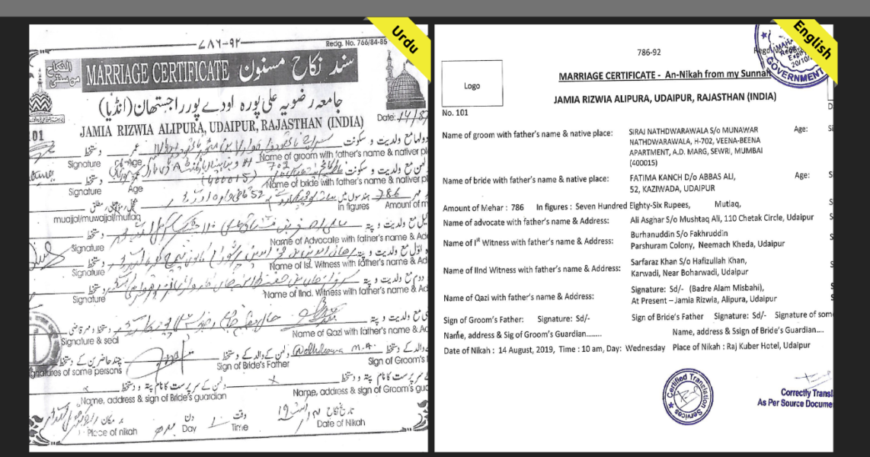
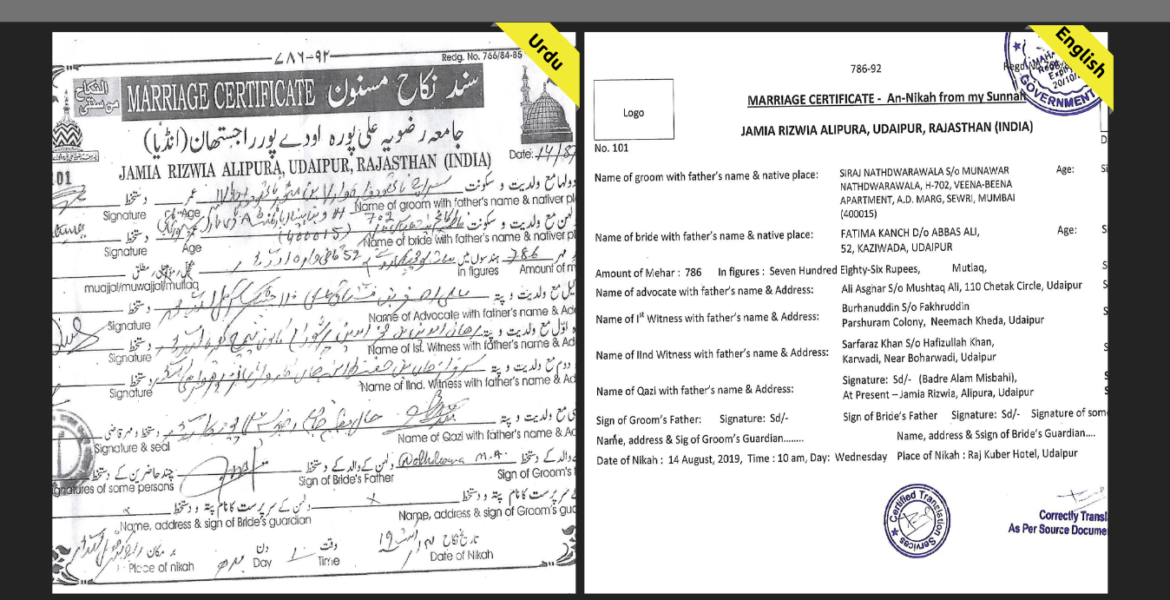
Urdu documents often contain legal and religious terminology that has no direct English equivalent. Marriage certificates may include Islamic marriage contract language. Affidavits may use formal Urdu legal phrases. Property documents may reference traditional terms. A poor Urdu to English translation may translate these terms literally, losing their legal meaning, or omit them entirely.
A professional Urdu to English translation must convey the legal effect of the original document, not just the words. The translator should be familiar with Pakistani legal and religious terminology and able to explain it accurately in English. Syed Professional Services works with translators who specialize in legal Urdu to English translation for immigration and tax purposes. We ensure that every Urdu to English translation preserves the meaning and legal significance of the original.
Mistake #6: Failing to Translate the Entire Document
Another devastating Urdu to English translation mistake is translating only part of a document. A birth certificate may have handwritten notes on the back. A marriage certificate may include signatures and stamps that need explanation. A tax record may have marginal annotations. If the Urdu to English translation omits these elements, the receiving agency may consider the translation incomplete.
A complete Urdu to English translation must include all text, stamps, seals, signatures, and handwritten notes. The translator should note any illegible portions and explain them. Syed Professional Services reviews every page of your document to ensure that the Urdu to English translation is complete and that nothing is omitted. Incomplete Urdu to English translation is one of the most common reasons USCIS rejects evidence.
Mistake #7: Not Integrating Urdu to English Translation with Your Tax and Immigration Strategy
The final and most strategic Urdu to English translation mistake is treating translation as an isolated task. Your translated documents must align with your tax returns, your immigration forms, and your financial records. If your Urdu to English translation of a birth certificate shows a birth date that differs from your I-485, or if your Urdu to English translation of income records conflicts with your tax return, you create inconsistencies that damage credibility.
At Syed Professional Services, Urdu to English translation is integrated with our immigration, tax, and accounting services. We review your translated documents alongside your filings to ensure consistency. We help you correct discrepancies before they reach USCIS or the IRS. This integrated approach turns Urdu to English translation from a standalone expense into a strategic asset.
How Syed Professional Services Delivers Certified Urdu to English Translation
Our clients do not navigate Urdu to English translation alone. We provide:
-
Certified Urdu to English-translation of birth, marriage, and death certificates.
-
Urdu to English-translation of affidavits, police reports, and court documents.
-
Urdu to English-translation of tax records, income statements, and business documents.
-
Name transliteration consistency across all documents.
-
Date and calendar verification in every Urdu to English-translation.
-
Integration with immigration filings and tax returns.
-
Review and correction of previously mistranslated documents.
This comprehensive approach ensures that your Urdu to English-translation is accurate, certified, and strategically aligned with your goals.
Real-World Consequences of Urdu to English-Translation Errors
Consider these composite scenarios:
Scenario 1: An applicant submitted an Urdu to English-translation of her birth certificate with a name spelled differently from her passport. USCIS issued a Request for Evidence, delaying her green card by four months. Syed Professional Services prepared a corrected Urdu to English-translation with a transliteration note, resolving the issue.
Scenario 2: A business owner submitted an Urdu to English-translation of income records that reversed the day and month on several receipts. The resulting tax return misstated income timing, triggering an IRS notice. Syed Professional Services corrected the Urdu to English-translation and amended the return.
Scenario 3: A marriage-based petitioner submitted an Urdu to English-translation that omitted handwritten notes on the marriage certificate. USCIS rejected the evidence as incomplete. Syed Professional Services provided a complete Urdu to English-translation including all annotations, allowing the case to proceed.
In each case, professional Urdu to English-translation would have prevented the problem.
Frequently Asked Questions About Urdu to English-Translation
Q: Does USCIS require certified Urdu to English-translation?
A: Yes. Any foreign-language document submitted to USCIS must include a complete Urdu to English-translation with a translator’s certification.
Q: Can I translate my own documents?
A: USCIS does not allow you to certify your own Urdu to English-translation for documents you submit. Use a qualified, independent translator.
Q: How long does certified Urdu to English-translation take?
A: Timelines vary by document length and complexity. Syed Professional Services provides efficient Urdu to English-translation with clear turnaround estimates.
Q: Will an Urdu to English-translation affect my tax return?
A: Yes. Inaccurate Urdu to English-translation of income or expense records can lead to incorrect tax filings. Professional translation ensures accuracy.
Q: Can Syed Professional Services handle both translation and immigration filing?
A: Yes. We integrate certified Urdu to English-translation with immigration, tax, and accounting support for a seamless experience.
Proactive Steps You Can Take Today
-
Inventory your Urdu documents and identify which require Urdu to English-translation.
-
Check name spellings across all documents for consistency.
-
Avoid machine translation for official submissions.
-
Contact Syed Professional Services for certified Urdu to English-translation and integrated immigration and tax support.
Conclusion: Master Urdu to English-Translation for Immigration and Tax Success
The seven devastating mistakes—machine translation, uncertified translators, inconsistent names, date errors, ignored legal terminology, incomplete documents, and isolated translation—are all avoidable. Accurate Urdu to English-translation protects your immigration case, your tax compliance, and your financial credibility. With Syed Professional Services, your Urdu to English-translation becomes a certified, strategic asset. Contact us today to schedule your Urdu to English-translation consultation and take the next step toward a successful future.
