

7 Devastating W9 Form Mistakes That Trigger IRS Penalties and Immigration Delays – Ultimate Guide
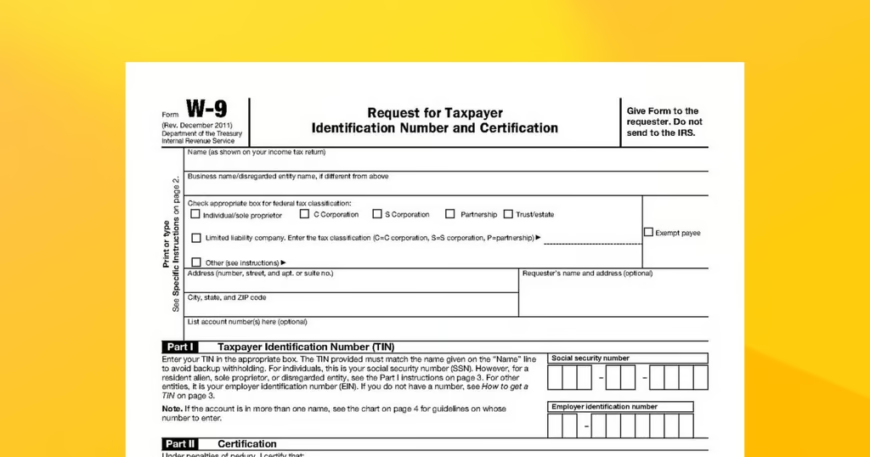
The W9 form is one of the shortest documents in the American tax system, yet it carries outsized consequences. At its core, the W9 form—officially the Request for Taxpayer Identification Number and Certification—is how a business collects the correct name and taxpayer identification number from a contractor, vendor, or independent worker before making a payment. When the W9 form is completed correctly, information reporting is clean, 1099-NEC filings go out on time, and the IRS has no reason to question your records. When the W9 form is missing, incomplete, or inaccurate, the consequences compound: backup withholding at 24%, penalty notices, mismatched 1099s, and audit exposure. For immigrants and mixed-status households, a flawed W9 form can also create inconsistencies in the financial documentation that USCIS reviews. At Syed Professional Services, we have seen a single W9 form error ripple through a business’s accounting system and a family’s immigration file. This guide exposes seven devastating W9 form mistakes and shows you how to avoid them.
Whether you are a nonprofit director onboarding a new consultant, a small business owner paying subcontractors, or an immigrant entrepreneur building a company in New York, the W9 form is a document you cannot afford to treat casually. This guide explains what the W9 form does, when you need it, how to collect it, and how to keep the information consistent with your tax returns, accounting records, and immigration filings. By the end, you will understand why the W9 form is not just a formality—it is a compliance control.
What Is a W9 Form and Why Does It Matter?
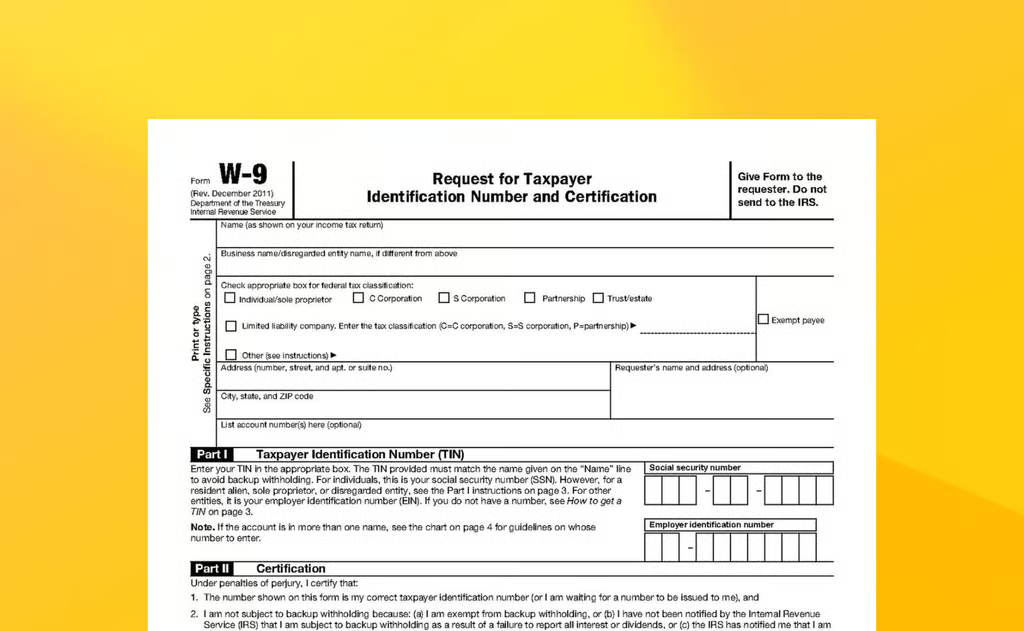
The W9 form is an IRS document used to collect a payee’s taxpayer identification information. It asks for the payee’s legal name, business name (if different), federal tax classification, address, and Taxpayer Identification Number—either a Social Security Number, an Employer Identification Number, or an Individual Taxpayer Identification Number. The person or entity paying for services uses the W9 form to prepare information returns such as Form 1099-NEC for nonemployee compensation, Form 1099-MISC for certain other payments, and Form 1099-K in payment card contexts.
The W9 form matters because it is the upstream control for downstream reporting. If the W9 form contains the wrong name or TIN, the 1099 filed from that information will not match IRS records. The IRS then sends a notice to the payer, and penalties can follow for each incorrect return. The W9 form also determines whether backup withholding applies. If a payee fails to furnish a valid W9 form, the payer may be required to withhold 24% of reportable payments and remit it to the IRS. The W9 form is therefore not a harmless onboarding document—it is the first line of defense for accurate tax reporting.
Devastating Mistake #1: Failing to Collect a W9 Form Before Paying a Contractor
The most common and expensive W9 form mistake is failing to collect one before payment. Many businesses pay contractors first and ask for paperwork later—or never ask at all. By the time the accounting team realizes a W9 form is missing, the contractor may be unresponsive, the project may be closed, and the payment records may be incomplete. The business then faces a choice: file a 1099 with missing or estimated information, or file nothing and hope the IRS does not notice. Neither option is good.
The solution is a W9 form-first policy. No W9 form, no payment. Build the W9 form into your vendor onboarding checklist so that it is collected before the first invoice is approved. For nonprofits, this applies to consultants, guest speakers, performers, and independent contractors. For small businesses, it applies to subcontractors, freelancers, and anyone paid $600 or more for services in the course of your trade or business. Syed Professional Services helps clients implement W9 form collection workflows that prevent last-minute scrambles. When the W9 form is collected up front, year-end 1099 filing becomes routine rather than chaotic.
Devastating Mistake #2: Accepting a W9 Form with a Mismatched Name and TIN
A W9 form is only useful if the name and TIN match IRS records. A devastating mistake is accepting a W9 form without verifying that the legal name matches the taxpayer identification number. A contractor might write a nickname on the W9 form while the TIN belongs to a legal name that is different. An LLC might provide its EIN but list a trade name that is not registered with the IRS. These mismatches trigger IRS matching notices and can result in penalties for the payer.
The solution is to verify the W9 form information before it enters your accounting system. Ask the payee to confirm that the name on the W9 form matches the name associated with the TIN. For entities, confirm whether the TIN belongs to the LLC, the corporation, or the sole proprietor. Use IRS TIN matching tools when available. Syed Professional Services reviews W9 form data for clients before 1099 season, catching mismatches early. When the W9 form is accurate, the 1099s are accurate, and the IRS has no reason to send a notice.
Devastating Mistake #3: Using the Wrong W9 Form Version or Form Type
The IRS periodically revises the W9 form. Using an outdated version is a common mistake, especially in organizations that keep stacks of pre-printed forms. An outdated W9 form may omit required certifications or include superseded instructions. A related mistake is using the wrong form entirely—asking a foreign vendor to complete a W9 form when a W-8BEN or W-8BEN-E is required, or asking an employee to complete a W9 form instead of a W-4.
The solution is to use the current W9 form from the IRS website and to match the form to the payee. U.S. persons—citizens, resident aliens, and U.S. entities—use the W9 form. Foreign persons generally use a W-8 series form. Employees use Form W-4, not the W9 form. Syed Professional Services advises clients on the correct W9 form version and on when a W-8 form is required instead. Getting the form right the first time prevents rework and withholding errors.
Devastating Mistake #4: Misclassifying the Federal Tax Classification on the W9 Form
The W9 form asks the payee to select a federal tax classification: individual or sole proprietor, partnership, C corporation, S corporation, LLC, or other. A devastating mistake is selecting the wrong classification or leaving it ambiguous. For example, an LLC might check “LLC” but fail to indicate its tax classification (C, S, or partnership). A single-member LLC might select “individual” without explaining the disregarded entity status. These ambiguities create confusion in 1099 reporting and can affect whether payments are reported on the correct form.
The solution is to review the W9 form classification carefully and, when necessary, ask the payee to clarify. For LLCs, confirm whether the entity files as a corporation, partnership, or disregarded entity. For sole proprietors, confirm whether the payment is for services reported on a 1099-NEC or for goods, which may not require reporting. Syed Professional Services helps clients interpret W9 form classifications and align them with accounting records. When the W9 form classification is clear, 1099 reporting is accurate and audit risk declines.
Devastating Mistake #5: Failing to Secure W9 Form Data
A W9 form contains sensitive information: names, addresses, and taxpayer identification numbers. A devastating mistake is storing W9 form data insecurely—emailing forms as unencrypted attachments, leaving paper forms on desks, or storing them in shared folders with broad access. Identity thieves actively seek TINs and personal information. A breach of W9 form data can lead to fraudulent tax filings, stolen refunds, and reputational damage.
The solution is to treat W9 form data as confidential financial information. Store digital W9 form records in an access-controlled system with encryption and audit logs. Limit access to staff who need it for tax reporting. Shred paper W9 forms when they are no longer needed or store them in a locked cabinet. Use secure transmission methods when requesting or sharing W9 form data. Syed Professional Services advises clients on W9 form retention and security practices that align with IRS recordkeeping rules and New York’s SHIELD Act. A secure W9 form process protects both the payer and the payee.
Devastating Mistake #6: Ignoring Backup Withholding and Missing W9 Form Follow-Up
When a payee fails to provide a W9 form, the payer may be required to begin backup withholding on reportable payments. A devastating mistake is ignoring this requirement or failing to follow up with the payee. Some businesses continue paying without a W9-form and without withholding, exposing themselves to penalties. Others collect the W9-form late but fail to document the follow-up, leaving them unable to demonstrate good-faith efforts during an audit.
The solution is a documented W9-form follow-up process. Request the W9-form in writing, set a deadline, and escalate if it is not returned. If backup withholding applies, withhold the correct rate and remit it properly. Keep records of every request and response. Syed Professional Services helps clients design W9-form follow-up procedures that satisfy IRS expectations and protect against penalties. When the W9-form process is documented, a missing form becomes a manageable compliance event rather than an audit surprise.
Devastating Mistake #7: Not Reconciling W9-Form Data with 1099s and Tax Returns
The final and most strategic W9-form mistake is treating it as an isolated onboarding document. The W9-form must reconcile with the 1099s you file and the expense deductions you claim on your tax return. If the W9-form shows one name and the 1099 shows another, the IRS matching system flags it. If the W9-form is missing for a vendor whose payments you deducted, an audit may question the deduction. For immigrants, inconsistencies between W9-form records, business tax returns, and immigration financial documentation can raise credibility concerns.
Syed Professional Services integrates W9-form review with tax preparation, accounting, and immigration support. We reconcile W9-form data against 1099 filings and expense records before submission. We identify missing forms, mismatched names, and incorrect TINs. When your W9-form records align with your returns, your tax filing is stronger and your immigration documentation is more credible.
Building a Winning W9-Form Workflow
Here is the proactive W9-form workflow Syed Professional Services recommends:
-
Collect the W9-form before the first payment. No form, no payment.
-
Use the current IRS W9-form and confirm the payee is a U.S. person. Use W-8 forms for foreign payees.
-
Verify name and TIN matching before entering the W9-form into your accounting system.
-
Clarify federal tax classification, especially for LLCs and sole proprietors.
-
Secure W9-form data with encryption, access controls, and locked storage.
-
Document follow-up when a W9-form is missing, and apply backup withholding if required.
-
Reconcile W9-form data with 1099s and tax returns before filing.
-
Seek professional review for complex W9-form and 1099 situations, especially in immigration-related cases.
This workflow transforms the W9-form from a routine form into a compliance control that protects your business and your immigration future.
How Syed Professional Services Transforms Your W9-Form Experience
Our clients do not manage the W9-form process alone. We provide:
-
W9-form collection and review workflows for businesses and nonprofits.
-
Name and TIN matching to prevent 1099 mismatches.
-
Federal tax classification guidance for LLCs, partnerships, and sole proprietors.
-
Backup withholding compliance and documentation.
-
1099-NEC and 1099-MISC preparation aligned with W9-form data.
-
Immigration-focused financial review to ensure W9-form records support your case.
-
Recordkeeping and security guidance for W9-form data.
This comprehensive approach turns the W9-form from a source of risk into a foundation of compliance and confidence.
Real-World Consequences of W9-Form Mistakes
Consider these composite scenarios based on cases we have encountered:
Scenario 1: A small business paid 20 contractors without collecting a W9-form. At year-end, the business could not file accurate 1099-NECs. The IRS assessed penalties for missing and incorrect returns. Syed Professional Services helped reconstruct records, file corrected 1099s, and implement a W9-form-first policy.
Scenario 2: A nonprofit accepted a W9-form with a trade name that did not match the EIN on file. The resulting 1099 triggered an IRS mismatch notice. Syed Professional Services corrected the W9-form data and resolved the notice before penalties accrued.
Scenario 3: An immigrant entrepreneur claimed contractor expenses on a business return but had no W9-form for several vendors. USCIS reviewed the business records during a visa petition and questioned the documentation. Syed Professional Services organized the W9-form records, corrected the 1099s, and provided a clear explanation that supported the petition.
In each case, a disciplined W9-form process would have prevented the problem. Syed Professional Services exists to ensure you never face these consequences alone.
Frequently Asked Questions About the W9-Form
Q: Who needs to complete a W9-form?
A: Any U.S. person—individual, sole proprietor, LLC, corporation, partnership, or nonprofit—who receives reportable payments for services generally completes a W9-form.
Q: When should I collect a W9-form?
A: Collect the W9-form before making the first payment. Do not wait until year-end or until a 1099 is due.
Q: What happens if I do not collect a W9-form?
A: Without a W9-form, you may be required to apply 24% backup withholding and may face penalties for missing or incorrect 1099s.
Q: Can a W9-form use an ITIN instead of an SSN?
A: Yes. A W9-form can include an ITIN for a payee who is not eligible for an SSN but is a U.S. person for tax purposes. Foreign persons generally use W-8 forms instead.
Q: How long should I keep W9-forms?
A: Keep W9-form records for at least three years after the due date of the return or the date filed, and longer if the records support other tax positions.
Proactive Steps You Can Take Today
-
Audit your vendor list for missing W9-forms.
-
Verify name and TIN matching on all existing W9-forms.
-
Update your onboarding checklist to require a W9-form before payment.
-
Contact Syed Professional Services for a comprehensive W9-form and 1099 compliance review, especially if you are an immigrant business owner preparing an immigration filing.
Conclusion: Master the W9-Form for Tax and Immigration Success
The seven devastating mistakes—failing to collect, mismatched name and TIN, wrong form version, ambiguous tax classification, insecure storage, ignored backup withholding, and poor reconciliation—are all avoidable with a disciplined W9-form process. The W9-form is short, but its impact on 1099 reporting, IRS penalties, and immigration financial documentation is enormous. When you treat the W9-form as a compliance control, you protect your business, your cash flow, and your credibility.
Syed Professional Services is your ultimate partner for W9-form compliance. We bring together tax, accounting, and immigration expertise to ensure that your W9-form records are accurate, secure, and aligned with your filings. Do not let a preventable W9-form mistake cost you penalties or delay your immigration case. Contact us today to schedule your W9-form compliance review. Together, we will turn this small form into a strong foundation for your financial and immigration future.
