

Introduction
If you’re hiring employees in the United States, understanding the i9 form is not optional—it’s absolutely essential. The i9 form plays a critical role in verifying the identity and employment eligibility of every worker you bring on board. Yet, despite its importance, many businesses still make costly mistakes when completing or maintaining the i9 form.
Whether you’re a small business owner or managing a growing company, getting the i9 form right can save you from penalties, audits, and legal trouble. In this comprehensive guide, we’ll break down everything you need to know about the i9 form, including common errors, compliance tips, and best practices to keep your business protected.
Understanding the Basics of the i9 Form
The i9 form, officially known as Employment Eligibility Verification, is required by U.S. law for every employee hired after November 6, 1986. Its main purpose is simple: confirm that employees are legally authorized to work in the United States.
Employers must ensure the i9 form is completed correctly within a specific timeline. Section 1 must be filled out by the employee on their first day of work, while Section 2 must be completed by the employer within three business days.
The i9 form requires employees to present valid identification documents, such as a passport or a combination of a driver’s license and Social Security card. Employers must physically examine these documents to verify authenticity.
One key thing to remember is that the i9 form should never be submitted to the government unless requested. Instead, employers must retain it for inspection in case of an audit.
Failure to properly complete the i9 form can result in serious penalties. That’s why understanding its structure and requirements is the first step toward compliance.
Why the i9 Form Is So Important for Businesses
The i9 form is more than just paperwork—it’s a legal safeguard for your business. It protects employers from hiring unauthorized workers and ensures compliance with federal immigration laws.
Ignoring or mishandling the i9 form can lead to hefty fines, which can range from hundreds to thousands of dollars per violation. In severe cases, businesses may even face criminal charges.
Another reason the i9 form matters is that it demonstrates good faith during audits. If your records are complete and accurate, you’re far less likely to face penalties.
The i9 form also helps create a standardized hiring process. By requiring the same verification steps for every employee, it reduces the risk of discrimination claims.
In today’s regulatory environment, the i9 form is a critical part of your compliance strategy. Treating it seriously can save your business from unnecessary risks and financial losses.
Common i9 Form Mistakes You Must Avoid
Even experienced employers make mistakes when handling the i9 form. Unfortunately, even small errors can lead to big consequences.
One common mistake is missing deadlines. The i9 form must be completed within strict timeframes, and delays can result in violations.
Another frequent issue is incomplete information. Missing signatures, incorrect dates, or blank fields can invalidate the i9 form.
Employers also often fail to properly verify documents. Accepting expired or invalid identification can create compliance issues.
Storage mistakes are another problem. The i9 form must be stored securely and separately from general employee files. Failing to do so can complicate audits.
Finally, many businesses forget to update or reverify the i9 form when necessary. This is especially important for employees with temporary work authorization.
Avoiding these mistakes can dramatically reduce your risk and ensure your i9 form process remains compliant.
Step-by-Step Guide to Completing the i9 Form
Completing the i9 form correctly doesn’t have to be complicated if you follow a clear process.
First, provide the i9-form to the employee on their first day. They must complete Section 1, including personal details and citizenship status.
Next, the employee must present acceptable documents. As an employer, you must review these documents carefully.
Then, complete Section 2 of the i9-form. Record document details and certify that you’ve examined them.
Make sure everything is accurate. Double-check dates, names, and document numbers before finalizing the i9-form.
After completion, store the i9-form securely. Keep it for at least three years after the date of hire or one year after employment ends—whichever is later.
Following these steps ensures your i9-form process is smooth and compliant.
Best Practices for Managing i9-Form Compliance
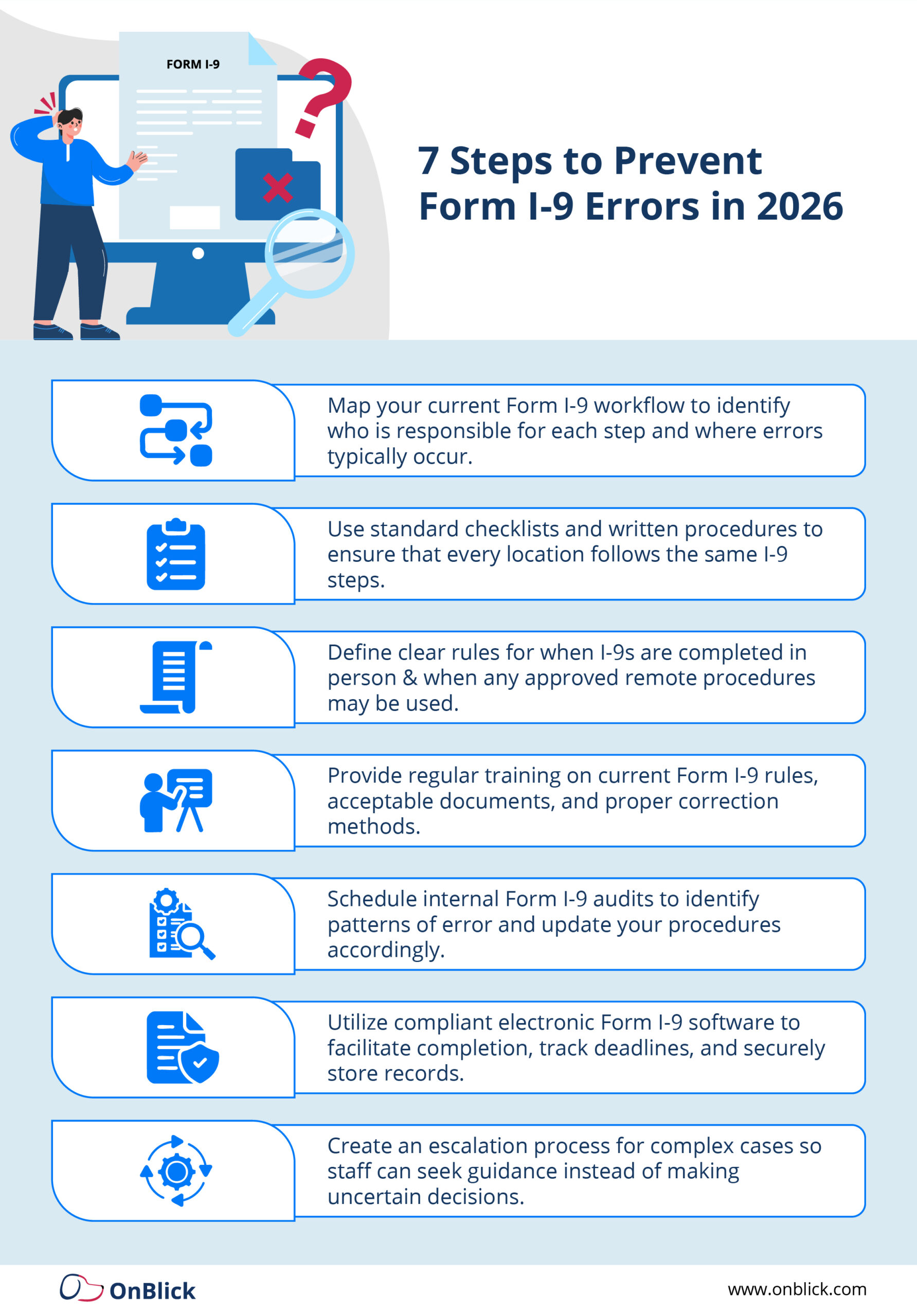
Managing the i9-form effectively requires more than just filling it out. You need a system in place to maintain compliance over time.
Start by creating a standardized process. Every employee should go through the same i9-form procedure.
Conduct regular audits of your i9-form records. This helps identify and fix errors before they become problems.
Consider using digital solutions. Electronic systems can streamline the i9-form process and reduce human error.
Train your staff on proper i9-form procedures. A well-informed team is your first line of defense against compliance issues.
Lastly, stay updated on regulations. Immigration laws can change, and your i9-form practices should evolve accordingly.
These best practices will help you maintain a strong and reliable i9-form system.
Benefits of Proper i9-Form Management
When handled correctly, the i9-form offers several benefits for your business.
First, it reduces legal risks. Proper documentation protects you during audits and inspections.
Second, it improves hiring efficiency. A streamlined i9-form process saves time and eliminates confusion.
Third, it enhances your company’s reputation. Compliance shows professionalism and responsibility.
The i9-form also helps build trust with employees. A transparent verification process creates a fair workplace.
Ultimately, managing the i9-form properly is an investment in your business’s long-term success.
FAQs
What is the i9-form used for?
The i9-form is used to verify the identity and employment eligibility of employees in the United States.
When should the i9-form be completed?
The i9-form must be completed within three business days of the employee’s start date.
Do employers submit the i9-form to the government?
No, the i9-form is retained by the employer and only provided if requested during an audit.
What documents are req
I9 Form
uired for the i9-form?
Employees must provide valid identification documents, such as a passport or a combination of approved IDs.
How long should the i9-form be kept?
The i9-form must be retained for three years after hire or one year after termination.
Can the i9-form be completed electronically?
Yes, employers can use electronic systems as long as they meet legal requirements.
Conclusion
The i9-form is a vital part of your hiring process, and getting it right is non-negotiable. From understanding its purpose to avoiding common mistakes, proper management of the i9-form can protect your business from costly penalties and legal trouble.
By following the strategies outlined in this guide, you can ensure your i9-form process is accurate, efficient, and fully compliant. If you need expert assistance, Syed Professional Services is here to help you navigate tax, accounting, and immigration requirements with confidence.

