


5 Horrifying myUSCIS Blunders That Sabotage Your Immigration Case – Ultimate Guide to a Flawless Application
The journey to a green card, citizenship, or a visa renewal is already stressful enough without a technology obstacle turning hope into a bureaucratic nightmare. The myUSCIS portal is the digital front door to U.S. Citizenship and Immigration Services, a platform that processes applications, schedules biometrics, sends case updates, and stores your most sensitive immigration documents. Yet every day, applicants stumble into completely avoidable myUSCIS traps that delay cases by months, trigger Requests for Evidence, or even cause outright denials. At Syed Professional Services, we’ve seen the devastating aftermath of these myUSCIS blunders—and we’ve helped hundreds of individuals and families fix them before it’s too late.
Whether you’re filing your first family-based petition or tracking a long-pending naturalization case, myUSCIS is a tool that can either smooth your path or become a source of constant anxiety. Mastering myUSCIS isn’t just about clicking the right buttons. It’s about understanding how the information you enter into myUSCIS connects to the financial affidavits, tax returns, and accounting evidence that USCIS officers actually scrutinize. As an integrated tax, accounting, and immigration firm, Syed Professional Services is uniquely positioned to help you align your myUSCIS profile with ironclad financial documentation, turning a potential liability into a seamless approval. Read on to discover the five myUSCIS horrors you must sidestep, and learn how to transform your myUSCIS experience from terrifying to triumphant.
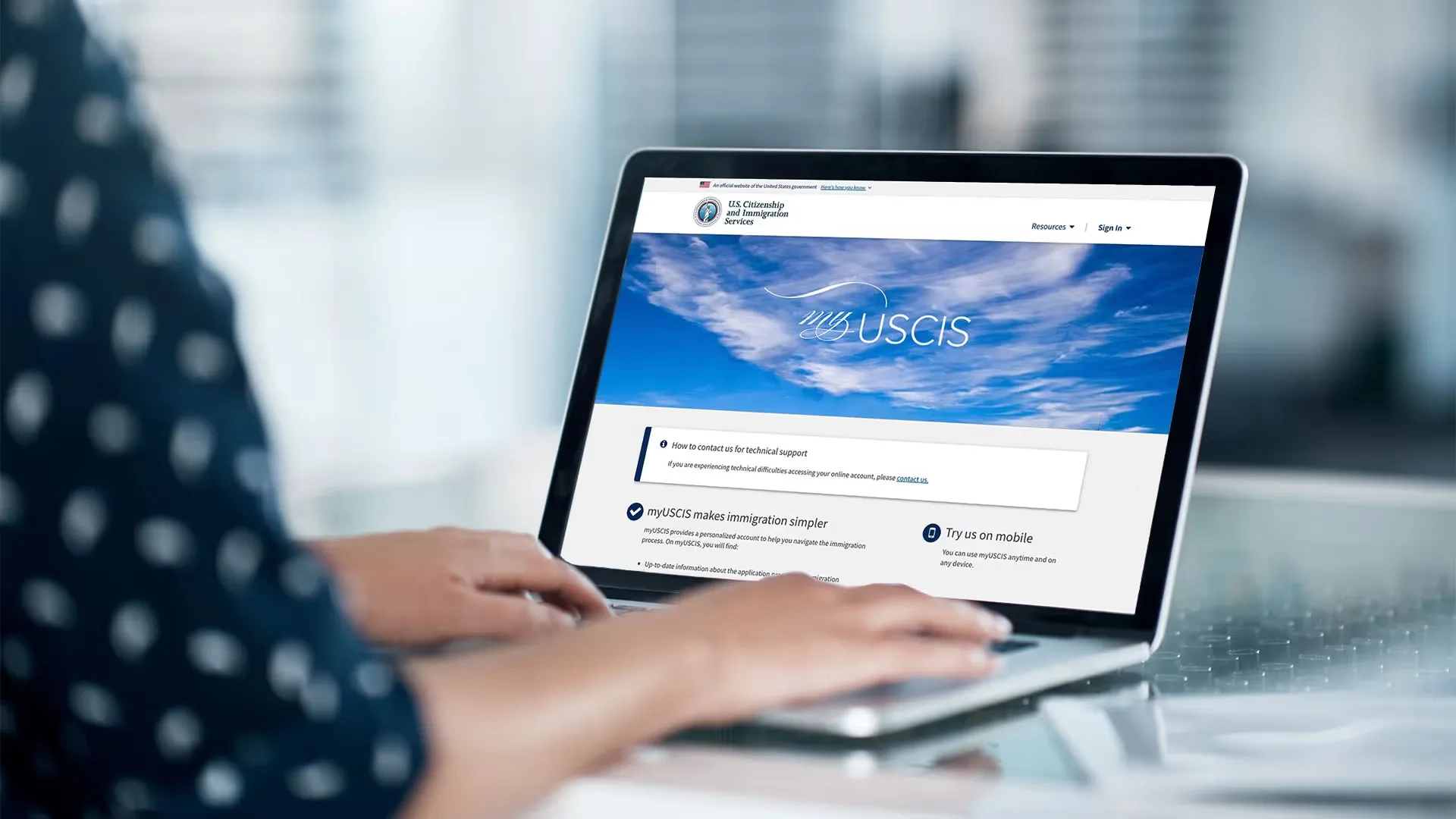
Why myUSCIS Is the Heartbeat of Your Immigration Case
Before we dive into the blunders, let’s define what myUSCIS truly is and why it matters so much. myUSCIS is the official online platform where applicants create an account, file forms electronically, upload supporting evidence, pay fees, receive USCIS notices, and monitor case status in real time. A properly managed myUSCIS account puts you in direct communication with the agency that decides your future. You can see when a decision is made, what documents are still needed, and when an interview is scheduled.
The power of myUSCIS is immense, but so is the responsibility. Without the right guidance, users of myUSCIS often misinterpret notice meanings, miss critical deadlines, or upload financial evidence that contradicts their tax filings. This is where Syed Professional Services steps in. We help clients review their myUSCIS accounts proactively, ensuring that every tax return, every bank statement, and every affidavit of support is consistent, authentic, and presented in a way that officers find persuasive. A myUSCIS profile supported by professional tax and accounting work stands far above the crowd.
Blunder #1: Creating Multiple myUSCIS Accounts or Using an Unverified Email
One of the most shocking and surprisingly common myUSCIS errors is the creation of duplicate accounts. An applicant might start an application on myUSCIS with one email address, forget the password, and then create a second myUSCIS account with a different email. USCIS systems link cases to the account from which the filing was initiated. If you later try to access your case from the wrong myUSCIS account, you won’t see your receipt number or case history. The panic sets in: “Has my case disappeared?” Frantic calls to the USCIS Contact Center follow, which can take weeks to resolve. Worse, if you inadvertently submit two petitions through different myUSCIS accounts, you may trigger confusion, fee loss, or even suspicion of fraud.
How to avoid this myUSCIS horror: create exactly one myUSCIS account with a secure, permanent email address you will always have access to. Use a strong password and enable two-factor authentication. Write down your myUSCIS credentials and store them safely. If you suspect you already have multiple myUSCIS accounts, reach out to a professional who can help you consolidate your cases under a single myUSCIS profile without triggering a data mismatch. At Syed Professional Services, we guide clients through myUSCIS account setup as part of our immigration preparation, ensuring your case remains easy to track and impossible to fragment.
Blunder #2: Uploading Inconsistent or Unacceptable Financial Documents
USCIS uses myUSCIS to receive your evidence, and for family-based and employment-based cases, that evidence almost always includes tax returns, W-2s, pay stubs, bank letters, and other financial records. A horrifying mistake is uploading documents that don’t match the numbers you reported to the IRS, or worse, uploading documents that are incomplete or in the wrong format. When the officer reviewing your myUSCIS evidence sees a tax return in your myUSCIS file that doesn’t match IRS transcripts, a red flag goes up immediately. The result? A Request for Evidence (RFE) or a Notice of Intent to Deny (NOID). Suddenly your fast-tracked case lurches into months of delay.
Before you ever upload a single PDF to myUSCIS, you must ensure that every financial document is accurate, current, and consistent with your filed tax returns. This is where professional tax and accounting support becomes non-negotiable. At Syed Professional Services, we prepare or review your tax returns not just for IRS compliance but for myUSCIS compatibility. We know what the I-864 Affidavit of Support demands, what income thresholds apply, and how to present self-employment income or assets so that they satisfy the myUSCIS officer. The tax return you upload to myUSCIS is more than a form; it’s the financial pillar of your application. Don’t let a simple error inside your myUSCIS upload folder tank your entire case.
Blunder #3: Ignoring Notifications and Missing Deadlines on myUSCIS
myUSCIS sends electronic notices when USCIS requires action—an RFE deadline, a biometrics appointment, an interview notice, or a decision letter. The horrifying reality is that these notices go straight to your myUSCIS account, and if you aren’t checking it regularly or don’t have email alerts properly configured, you could miss a deadline entirely. Miss a biometrics appointment because you didn’t see the myUSCIS notice, and your application may be considered abandoned. Fail to respond to an RFE by the date stamped in your myUSCIS inbox, and your case dies. We’ve seen applicants who checked their myUSCIS account only when they felt anxious, discovering that a deadline had passed two weeks prior.
Syed Professional Services urges every client to treat myUSCIS like a daily essential, especially during active case processing. Log in at least once a week, check the “Documents” tab, and read every message. Better yet, configure myUSCIS to send email and text alerts so you’re notified the moment something changes. If you work with our immigration team, we monitor your myUSCIS account status together with you, providing an extra set of eyes so no deadline slips through. A proactive myUSCIS habit can be the difference between a smooth approval and a costly, heart-wrenching re-file.
Blunder #4: Misentering Personal Information on myUSCIS Forms
Filing forms through myUSCIS is convenient, but it also means you’re typing directly into the system. A single typo—a misspelled name, an incorrect date of birth, a wrong A-Number, a swapped digit in a passport number—can cause cascading problems. Your form data in myUSCIS must match your supporting documents exactly. If your birth certificate says “Jon” and you enter “John” on myUSCIS, you’ve just created an inconsistency that can trigger an RFE or delay. If your tax return shows a Social Security Number that’s off by one digit from what’s in your myUSCIS form, the verification systems may flag your case for manual review.
This my-USCIS blunder is especially dangerous because it feels so minor. But immigration officers are trained to treat inconsistencies as credibility issues. To avoid this, never rush through my-USCIS data entry. Have every identity document, previous USCIS receipt, and tax return in front of you as you fill out my-USCIS forms. Review each field twice before clicking submit. Better yet, let Syed Professional Services review your my-USCIS entries. With our combined tax, accounting, and immigration expertise, we cross-check the data you’re entering into my-USCIS against your actual official records, ensuring that your name, SSN, income figures, and addresses are flawlessly consistent.
Blunder #5: Failing to Link Paper Filings to a myUSCIS Account Effectively
Even if you file a paper application by mail, you can (and should) add that case to your my-USCIS account using the receipt number. A common and destructive my-USCIS oversight is forgetting to link the paper case or linking it incorrectly. Without the case properly attached to your my-USCIS account, you won’t receive electronic updates, you won’t see RFEs online, and you won’t be able to upload additional evidence if USCIS allows it. You’ll be stuck waiting for postal mail, which can be delayed, lost, or arrive after critical deadlines. In an era where USCIS increasingly expects applicants to use my-USCIS for case management, leaving your case unlinked is a self-inflicted disadvantage.
As soon as you receive a paper receipt notice, log into my-USCIS, click “Add a case to your account,” and enter the receipt number exactly as it appears. Verify that the case shows up immediately. If it doesn’t, don’t ignore it—contact USCIS or seek professional help. At Syed Professional Services, we ensure that every case we handle is fully visible within my-USCIS, whether it was originally filed electronically or by mail. That way, our clients never miss an update and always have a complete, real-time view of their immigration status through my-USCIS.
The Vital Link Between myUSCIS and Tax & Accounting Documentation
Now that you understand the technical my-USCIS pitfalls, let’s address a dimension that many applicants overlook: the financial credibility embedded in every my-USCIS submission. When you upload an I-864 Affidavit of Support, your federal tax returns, W-2s, 1099s, and proof of current income to my-USCIS, you are making a legal declaration about your financial capacity. If those documents contain errors, if they aren’t consistent with what the IRS has on file, or if your accounting records seem disorganized, the my-USCIS officer is trained to question your ability to support the intending immigrant. This is why Syed Professional Services strongly recommends that every document destined for my-USCIS be prepared or reviewed by a qualified tax professional.
Consider a scenario: a U.S. citizen spouse uses my-USCIS to upload a joint tax return that was prepared hastily using self-service software. The return shows a large amount of unreported cash income or takes deductions that reduce the Adjusted Gross Income below the poverty guideline threshold. To the my-USCIS officer, that return suggests either tax fraud or insufficient income—both catastrophic for the case. Our tax and accounting team at Syed Professional Services catches these discrepancies before they hit my-USCIS, helping you amend incorrect returns, document genuine income streams, and present a financial picture that is both truthful and persuasive. When your my-USCIS documents reflect clean, professionally prepared tax records, the officer gains confidence and your case moves forward.
How Syed Professional Services Turns myUSCIS into an Asset, Not an Obstacle
At Syed Professional Services, we don’t just fill out forms—we build complete, cohesive immigration packages designed to sail through my-USCIS scrutiny. Our unique integration of tax, accounting, and immigration services means that the financial evidence you submit through my-USCIS is never an afterthought. When you sit down with us, we review your tax history, your current income, your assets, and your household size in light of USCIS poverty guidelines. We then ensure that the numbers on your my-USCIS I-864, I-134, or I-944 (if applicable) match your IRS transcripts down to the dollar. That alignment eliminates the most common my-USCIS-related RFEs we see: requests for additional tax documentation or explanations of income discrepancies.
Beyond document preparation, we actively manage the my-USCIS interface for clients who want full-service support. We help you configure notifications, upload evidence in accepted formats, and respond to electronic RFEs promptly. If a notice appears in your my-USCIS inbox, we interpret it for you and craft a legally sound response that addresses the officer’s specific concern. Rather than being intimidated by my-USCIS, our clients feel empowered knowing that an expert team is navigating every click, every upload, and every message inside the platform. Your myUSCIS account becomes a transparent dashboard of progress rather than a source of dread.
Protecting Your myUSCIS Account from Security Threats
Another underappreciated dimension of my-USCIS management is cybersecurity. Your my-USCIS account contains personal data—dates of birth, A-Numbers, addresses, and copies of sensitive documents. A compromised my-USCIS account could lead to identity theft or even fraudulent changes to your case. Syed Professional Services advises every client to use a strong, unique password for my-USCIS, never share login credentials, and beware of phishing emails that mimic USCIS communications.
Leveraging my-USCIS Case Status Tools for Peace of Mind
One of the most valuable features of my-USCIS is the case status dashboard, which shows exactly where your application stands—from “Case Was Received” to “Card Was Mailed.” Learning to read and understand these my-USCIS status updates can save you countless hours of anxiety. However, some statuses can be ambiguous. “Case Is Being Actively Reviewed” could mean an approval is imminent, or it could mean your case is in a queue for months.
Real Stories: How my-USCIS Mastery Rescued Immigration Cases
To illustrate the power of proper my-USCIS management, let’s look at two composite examples from our client experience. In the first, a husband filing for his wife’s adjustment of status uploaded his tax returns to my-USCIS without realizing that his 1099 independent contractor income was not properly documented. The my-USCIS officer issued an RFE questioning his income stability. Syed Professional Services stepped in, prepared a detailed profit-and-loss statement, filed an accurate amended tax return, and uploaded the complete package to my-USCIS within the response window. The case was approved two weeks later.
In the second example, a naturalization applicant missed her interview notice because she rarely checked her my-USCIS account. By the time she realized, USCIS had deemed her application abandoned. We immediately contacted USCIS through the my-USCIS message portal, provided evidence that she had not received a mailed notice either, and successfully petitioned to have the case reopened and the interview rescheduled. Without rapid my-USCIS intervention, her application would have been dead. These stories underscore why my-USCIS cannot be treated as an afterthought. With Syed Professional Services in your corner, your my-USCIS management is proactive, not reactive.
Building a my-USCIS Checklist for a Bulletproof Filing
Here is a practical, step-by-step my-USCIS checklist we recommend to every client:
-
Create a single my-USCIS account with a permanent email address.
-
Enable two-factor authentication and store backup codes securely.
-
Before filing, gather all identity documents, tax returns, and supporting evidence.
-
Review all forms for typographical accuracy against your official documents.
-
Have Syed Professional Services review tax and income evidence for my-USCIS compliance.
-
Upload clear, properly oriented PDF scans to my-USCIS; avoid password-protected files.
-
After submission, immediately add your receipt number to my-USCIS.
-
Set up email and text notifications in my-USCIS for real-time updates.
-
Log into my-USCIS at least twice a week during active processing.
-
If you receive an RFE through my-USCIS, contact Syed Professional Services before responding.
This my-USCIS checklist transforms a chaotic process into a structured, confident march toward approval.

Frequently Asked Questions About my-USCIS
Q: Can I file all my immigration forms through my-USCIS?
A: Many forms are available for electronic filing on my-USCIS, including I-130, I-485, I-765, N-400, and others. However, some forms or case types may still require paper filing. Check my-USCIS for the most current list. Even for paper filings, you can link your case to your my-USCIS account.
Q: Is my-USCIS secure enough for sensitive tax documents?
A: USCIS employs encryption and security protocols to protect my-USCIS data. However, you should always practice good security hygiene, such as using strong passwords and avoiding public Wi-Fi when accessing my-USCIS. Syed Professional Services can advise you on secure submission practices.
Q: What if I see an error in my application after submitting through my-USCIS?
A: Contact Syed Professional Services immediately. Depending on the error, we can help you submit a correction through my-USCIS, upload a corrected document, or contact USCIS to amend the record before a decision is made.
Q: How long does it take for my-USCIS to update case status?
A: my-USCIS generally updates in near real-time when an officer takes action, but internal processing times can vary. If your my-USCIS status hasn’t changed in a suspiciously long time, it might be worth an inquiry.
The Ultimate my-USCIS Partner: Syed Professional Services
When you choose Syed Professional Services, you aren’t just hiring an immigration form-filler. You’re partnering with a firm that understands the intersection of law, taxes, and technology. Our deep experience with my-USCIS spans family-based petitions, employment authorizations, naturalizations, and complex cases where financial documentation is the deciding factor. We view my-USCIS not as a confusing portal, but as a window into your case’s progress—a window we keep crystal clear for every client. By combining tax preparation, accounting accuracy, and immigration strategy, we ensure that what an officer sees on my-USCIS is a flawless, consistent, and compelling story of eligibility.
Don’t let a preventable my-USCIS blunder turn your American dream into a bureaucratic nightmare. Whether you’re just starting your immigration journey or you’re stuck in a frustrating my-USCIS loop, Syed Professional Services is ready to help you regain control and confidence. Contact us today to schedule a consultation. We’ll review your my-USCIS account, audit your documents, and craft a plan that gets your case back on track. With the right expertise, my-USCIS stops being a source of fear and becomes the digital key that unlocks your future. Your successful immigration story starts with a single, well-managed my-USCIS session—and we’ll be there with you every step of the way.

