

USCIS Filing Fees: 9 Powerful Ways to Avoid Costly Mistakes
USCIS filing fees can change by form, filing method, eligibility category, and even the law that authorizes a particular charge. Before mailing or submitting an immigration form online, confirm the exact amount on the official USCIS Fee Schedule and the page for the form you are filing. An incorrect payment can cause USCIS to reject a filing, which may create delays or other consequences. As of August 2026, many widely used base fees remain the same as those established under the 2024 fee rule, while certain immigration-related fees created by Public Law 119-21 have separate FY 2026 inflation adjustments.
The safest approach is simple: identify the form, confirm whether online filing is available, check for additional statutory charges, determine whether a fee waiver or reduced fee applies, and use the payment method USCIS accepts for that filing.
Context: Why USCIS Filing Fees Require Careful Review
For many applicants, USCIS filing fees look straightforward until they begin preparing the actual package. One form may have a lower online fee, another may only be filed on paper, and another may require a separate additional charge. Some applicants qualify for a reduced fee or exemption, while others must pay the full amount.
USCIS makes clear that an application, petition, or request must include the correct fee unless an exemption or approved waiver applies. If the amount is wrong, USCIS may reject the submission. That makes fee verification a filing requirement, not just a budgeting exercise.
There is another reason USCIS filing fees deserve a fresh check before every submission: the fee system is no longer governed by one single update. The 2024 USCIS fee rule changed many common application costs, and Public Law 119-21 later added separate charges for certain immigration benefits. Some of those statutory amounts are adjusted for inflation. USCIS announced FY 2026 increases for several of these immigration-related fees, including certain employment authorization and Temporary Protected Status charges.
For a website visitor, the practical lesson is that an old blog post, screenshot, social media post, or saved checklist can become outdated. Always use the official USCIS source immediately before filing.
What Works: 9 Ways to Handle USCIS Filing Fees Correctly
1. Start With the Exact Form Number
The first step is to identify the precise form and filing category. USCIS filing fees are tied not only to the form number but sometimes to the reason for filing.
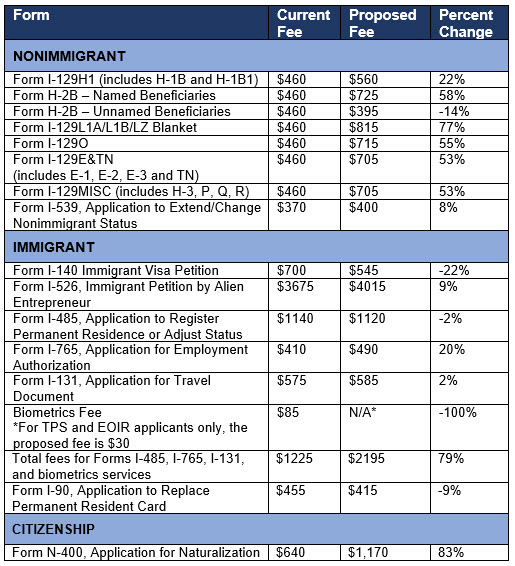
For example, Form I-765, Application for Employment Authorization, has different fee treatment depending on eligibility category and whether the applicant has a pending Form I-485. The general filing amount listed by USCIS is $520 for paper filing and $470 for eligible online filing, while some applicants with a qualifying pending adjustment application may pay $260. Other categories can have additional statutory fees.
That is why searching only for “work permit fee” or “green card fee” can be risky. Start with the exact USCIS form number and then read the filing category that applies to you.
2. Compare Online and Paper Filing Costs
Some USCIS filing fees are lower when an eligible form is filed online. Form I-130, Petition for Alien Relative, has been listed at $625 for online filing and $675 for paper filing. Form N-400, Application for Naturalization, is listed at $710 online and $760 on paper for general filing.
The difference may look small, but families filing multiple forms can benefit from checking whether online submission is available. Online filing can also provide electronic notices and account access, although eligibility and filing procedures vary by form.
Do not choose online filing only because it is cheaper. Make sure the specific form and category can actually be filed online.
3. Budget for Adjustment of Status Separately
One of the most important USCIS filing fees for family-based applicants is Form I-485, Application to Register Permanent Residence or Adjust Status. The general filing fee is $1,440, while a reduced amount may apply to certain children under age 14 filing with a parent.
Applicants should also remember that employment authorization and travel documents are not automatically bundled into the I-485 fee for filings made under the current fee structure. USCIS has explained that Form I-765 and Form I-131 can require separate fees when filed in connection with a post-April 1, 2024 adjustment application.
This is a common budgeting mistake. A family may plan only for the I-485 amount and then discover that optional or related filings create additional costs.
4. Check Naturalization Fee Options
For citizenship applicants, USCIS filing fees depend on the filing method and, in some cases, household income. USCIS lists the general N-400 fee at $760 for paper filing and $710 for online filing. A $380 paper filing option is available for qualifying applicants whose documented annual household income is not more than 400% of the Federal Poverty Guidelines. Certain military applicants may pay no fee, and some applicants may qualify for a fee waiver.
The important point is that a reduced fee is not automatic. Applicants must meet the requirements and provide the supporting documentation USCIS requires.
5. Do Not Overlook Fees Added by New Laws
Some USCIS filing fees now include or sit alongside separate charges created by federal law. Public Law 119-21 added fees affecting asylum, certain employment authorization requests, Temporary Protected Status, parole-related filings, and other categories. USCIS states that these additional fees generally must be paid separately and are not eligible for a fee waiver.
For FY 2026, USCIS announced inflation increases for certain statutory amounts. Examples include an increase from $550 to $560 for specified initial EAD categories and an increase from $500 to $510 for Form I-821 in the affected TPS context.
This is why a fee figure from 2025 may not always be reliable in 2026, even if the underlying form itself has not changed.
6. Understand Fee Waivers and Exemptions
Not all USCIS filing fees must be paid by every applicant. USCIS provides fee exemptions for specific categories, and certain applicants may request a fee waiver using Form I-912 when the benefit request is eligible.
However, a fee exemption and a fee waiver are different. An exemption means the applicable category has a $0 filing fee. A waiver generally requires the applicant to request relief from an otherwise applicable fee and show eligibility. USCIS also notes that most online filings do not allow a fee waiver request; applicants seeking a waiver generally need to file on paper.
Just as important, additional fees imposed by Public Law 119-21 generally cannot be waived even if the applicant may qualify to waive the underlying USCIS fee.
7. Use the Correct Payment Method
USCIS filing fees can generally be paid using methods such as check, money order, ACH debit, or credit card, depending on the filing location and type of submission. USCIS has also introduced Form G-1650 for certain ACH transactions and continues to use Form G-1450 for credit card authorization in eligible paper filings.
Payment rules can differ when filing online, by mail, or at a USCIS office. If filing online, the system normally guides the applicant through payment. For paper filings, read the form instructions and USCIS filing location guidance carefully.
A correct dollar amount paid through an unacceptable method can still create a problem, so verify both the amount and the payment procedure.
8. Keep Separate Payments Separate When Required
Some USCIS filing fees and additional statutory fees must be submitted as separate payments. USCIS specifically warns that certain Public Law 119-21 charges must accompany the filing but be paid separately from the underlying filing fee.
This matters for paper filing packages. Combining charges that USCIS instructs you to pay separately may lead to processing problems. Follow the current instructions for the exact form rather than assuming one check for the total is always acceptable.
A good filing checklist should therefore include four columns: form number, filing category, required fee, and required payment method.
9. Verify the Fee on the Day You File
The best protection against outdated USCIS filing fees is to verify the amount immediately before submission. Use the USCIS G-1055 Fee Schedule, the official page for the form, and any current USCIS alerts that apply to your category.
Do not rely only on a fee you checked weeks or months earlier. Immigration fees can change because of new rules, legislation, inflation adjustments, litigation, or implementation guidance.
For example, USCIS announced FY 2026 inflation adjustments affecting certain fees created by Public Law 119-21. That kind of change illustrates why even a recently prepared package deserves one final fee check.
Trade-Offs: Cheapest Filing Is Not Always the Right Filing
It is natural to look for ways to reduce USCIS filing fees, especially when a family is submitting several applications at once. Online filing can save money for certain forms, and eligible applicants may qualify for reduced fees, exemptions, or waivers.
But cost should not be the only factor. A lower online fee does not help if your category requires paper filing, if you need to submit a fee waiver request, or if your supporting evidence is better handled under a different permitted filing process.
Likewise, skipping an optional application such as employment authorization or travel documentation may reduce the amount paid at the beginning, but it can also affect practical needs while the main case is pending. Whether a related filing is appropriate depends on the applicant’s immigration situation.
The safest approach is to understand the purpose of each form before deciding which filings to submit.
Next Steps: A Simple Filing Fee Checklist
Before paying USCIS filing fees, complete this checklist:
- Confirm the current edition of the immigration form.
- Identify the exact filing category.
- Check the official USCIS G-1055 Fee Schedule.
- Compare eligible online and paper filing amounts.
- Look for additional statutory fees.
- Determine whether a reduced fee, exemption, or waiver applies.
- Confirm whether separate payments are required.
- Use an accepted payment method.
- Save copies of payment records and the entire filing package.
These steps may take a few extra minutes, but they can help prevent avoidable rejections and delays.
Micro-FAQs
How much are USCIS filing fees in 2026?
There is no single amount. USCIS filing fees depend on the form, filing category, submission method, and whether an additional statutory fee applies. For example, the general N-400 fee is $710 online or $760 on paper, while the general I-485 fee is $1,440. Some separate FY 2026 statutory fees were also adjusted for inflation.
Can USCIS reject my case if I pay the wrong fee?
Yes. USCIS states that if the required fee is incorrect and no valid exemption or waiver applies, the application, petition, or request can be rejected.
Can I get a waiver of USCIS filing fees?
Possibly. Some forms and categories allow a fee waiver, commonly requested with Form I-912, while other categories are automatically fee-exempt. However, certain additional fees required by Public Law 119-21 are not waivable.
References
This article is based on current guidance from U.S. Citizenship and Immigration Services, including Form G-1055, the USCIS Fee Schedule, current form-specific fee information, and USCIS FY 2026 fee adjustment notices. Because immigration fees can change, readers should always verify the latest amount directly with USCIS before filing.
CTA
Need help organizing an immigration filing, reviewing document requirements, or understanding which government fees may apply to your application? Syed Professional Services can help you prepare for a more organized filing process.
Contact Syed Professional Services at SyedPro.com to discuss immigration document preparation and filing support.
Disclaimer: This article is for general informational purposes only and does not constitute legal advice. USCIS rules, forms, and fees can change. For legal advice about your specific immigration situation, consult a qualified immigration attorney or accredited representative.

