

IRS Where My Refund: 7 Powerful Fixes for Costly Delays
Waiting for a federal tax refund can be frustrating, especially when you filed on time and expected your money quickly. If you searched irs where my refund, you are probably trying to answer one simple question: where is your refund right now?
The IRS provides online tools that can help you track a federal tax refund, but the different status messages and processing timelines are not always easy to understand. A refund that appears delayed does not necessarily mean that something is wrong with your tax return.
This guide from Syed Professional Services explains how irs where my refund works, when you should start checking your refund, what the different IRS refund statuses mean, why refunds may be delayed, and what steps you can take when your refund seems to be taking longer than expected.
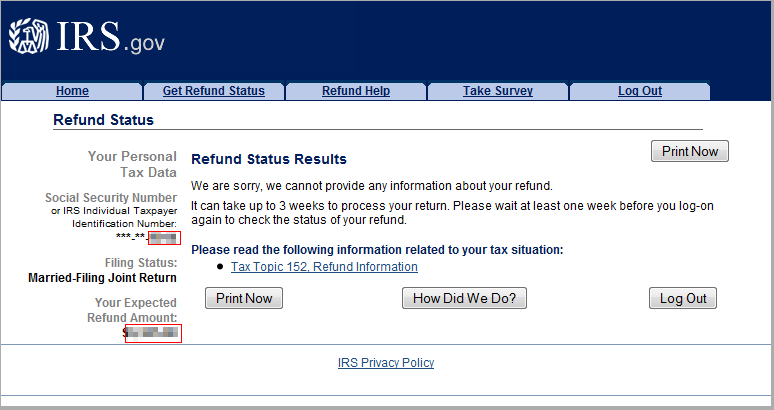
Quick Answer: How Do You Check Your IRS Refund?
The fastest way to check a federal income tax refund is through the official IRS “Where’s My Refund?” tool or your IRS Individual Online Account.
For most current-year electronically filed tax returns, the IRS says refund status information is generally available within 24 hours after e-filing. For prior-year electronically filed returns, information may become available after three or four days. Taxpayers who mail paper returns may need to wait approximately four weeks before refund status information appears.
When taxpayers search irs where my refund, they sometimes expect to see an exact deposit date immediately. That may not happen at first.
Instead, the IRS refund tracker generally moves through three stages:
- Return Received
- Refund Approved
- Refund Sent
After the IRS completes processing and approves your refund, the tracker may provide a personalized refund date.
What Information Do You Need for IRS Where My Refund?
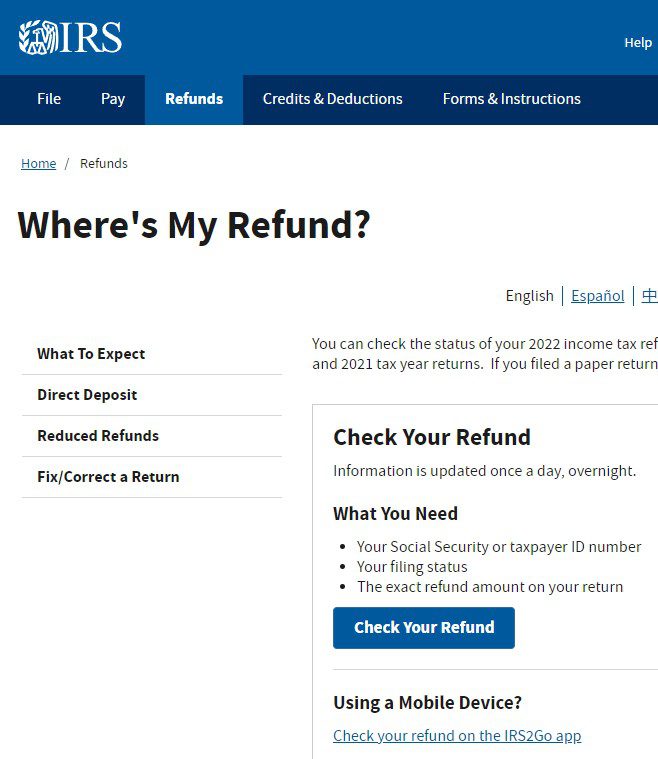
Before checking irs where my refund, have a copy of the federal tax return you actually filed.
The IRS generally requires:
- Your Social Security number or Individual Taxpayer Identification Number (ITIN)
- Your tax filing status
- Your exact whole-dollar expected refund amount
- The tax year you want to check
The information must match your filed tax return.
For example, do not enter a refund estimate from a tax calculator if the refund amount on your completed return is different. Similarly, selecting the wrong filing status could prevent the system from locating your refund information.
If irs where my refund says that your information does not match, double-check each entry before assuming your tax return has a problem.
Understanding the 3 IRS Refund Status Messages
Knowing what each refund status means can eliminate a lot of unnecessary concern. The irs where my refund process becomes much easier to understand when you consider each status separately.
1. Return Received
“Return Received” means the IRS has received your tax return and is processing it.
It does not mean that your refund has already been approved.
At this point, the IRS may still be checking information reported on your return, verifying credits, reviewing possible errors, or performing other normal processing procedures.
If irs where my refund remains on Return Received for several days, that alone does not prove your return has a problem. Some tax returns simply require more processing time than others.
2. Refund Approved
“Refund Approved” means your return has moved further through the IRS system and your refund has been approved.
The tracker may provide an expected refund date after approval.
For taxpayers repeatedly checking irs where my refund, this is generally an important update because it means the refund has progressed beyond the initial processing stage.
However, remember that an estimated refund date is not the same as a guarantee that the money will be available in your bank account at a particular hour.
3. Refund Sent
“Refund Sent” means the IRS has issued your refund.
For direct deposit, your bank or other financial institution may still require additional time to post the payment to your account. Weekends and holidays can also affect processing by financial institutions.
If irs where my refund shows Refund Sent but you cannot see the money in your account, compare the IRS refund date with your bank’s processing schedule before assuming the payment is missing.
How Long Does an IRS Tax Refund Usually Take?
According to current IRS guidance, most refunds are issued in less than 21 days. The IRS describes approximately three weeks as a typical timeframe for an electronically filed return, while mailed returns generally require more processing time.
However, you should not make an important purchase or payment based solely on an estimated refund date.
The IRS specifically cautions taxpayers against relying on receiving a refund by a particular date because some returns need additional review.
That makes irs where my refund useful primarily as a tracking tool rather than a guarantee of exactly when your money will arrive.
Your refund timing may depend on:
- Whether you electronically filed or mailed the return
- Whether you chose direct deposit
- Whether the return contains an error
- Whether additional information is required
- Whether identity verification is necessary
- Whether certain tax credits were claimed
- Whether you filed an amended return
- How quickly your financial institution processes the payment
7 Powerful Reasons Your IRS Refund May Be Delayed
A delayed refund does not automatically mean that you are being audited or that you have a serious tax problem.
If irs where my refund has remained unchanged, one of these common situations could be involved.
1. Your Tax Return Contains an Error
Even relatively simple mistakes can slow tax return processing.
The IRS has identified errors and incomplete information as possible reasons a tax refund can take longer.
Problems can include incorrect taxpayer information, mathematical mistakes, missing information, incorrect credit calculations, or other inconsistencies.
Before filing your return, carefully review:
- Names
- Social Security numbers or ITINs
- Filing status
- Income documents
- Tax credits
- Deductions
- Bank routing numbers
- Bank account numbers
Accurate filing cannot guarantee a particular refund date, but it can reduce preventable processing problems.
2. Your Return Requires Additional Review
Some returns require more IRS review than others.
If irs where my refund does not change for longer than you expected, the IRS may still be reviewing or verifying information.
The IRS may eventually update the tracker with further instructions or send you a letter if additional information is required.
If you receive legitimate IRS correspondence, read the entire notice carefully. Determine what information the IRS is requesting and whether a response deadline applies.
Ignoring an IRS notice can make resolving a tax issue more difficult.
3. You Claimed the EITC or ACTC
Refunds involving the Earned Income Tax Credit, commonly called the EITC, or the Additional Child Tax Credit, known as the ACTC, can follow different timing rules.
Federal law prevents the IRS from issuing refunds containing these credits before mid-February.
For the 2026 filing season, the IRS said many qualifying early filers who electronically filed, selected direct deposit, and had no other return issues could expect refunds by March 2.
Therefore, if irs where my refund seems slower for a return claiming one of these credits, the delay may result from federal refund timing rules rather than an error on your return.
4. The IRS Needs to Verify Your Identity
Tax-related identity theft and fraudulent returns are serious problems, so the IRS uses identity-verification procedures to protect taxpayers.
Some returns may require additional verification before processing can continue.
If irs where my refund or an official IRS notice directs you to complete identity verification, follow the instructions provided by the IRS.
Be cautious about unexpected emails, text messages, social media messages, or phone calls asking you to provide sensitive tax information.
Do not send your Social Security number, tax documents, or banking information simply because someone claims your refund will be released afterward.
5. Your Direct-Deposit Information Has a Problem
Direct deposit is normally faster and more convenient than waiting for a mailed check.
However, incorrect banking information can create problems.
If irs where my refund says that your refund was sent, review the bank account and routing information entered on your filed return.
The IRS is also moving away from paper refund checks as part of the federal government’s broader transition toward electronic payments.
Remember that a professional tax preparer can help review the banking information entered on your return, but the IRS and the financial institution ultimately control the movement of the refund payment.
6. You Filed an Amended Tax Return
The regular IRS refund tracker is not the correct tool for checking a Form 1040-X amended return.
If you amended your federal income tax return, use the IRS “Where’s My Amended Return?” service instead.
The IRS currently states that taxpayers can generally begin checking an amended return approximately three weeks after submission. Processing normally takes approximately eight to twelve weeks, although some amended returns can take up to sixteen weeks.
Therefore, irs where my refund may not provide the information you need when your refund relates to an amended return.
7. Your Refund Was Sent but Never Arrived
Sometimes a taxpayer sees that a refund has been issued but still does not receive the payment.
The IRS has procedures for tracing certain missing refunds.
For mailed checks, the IRS says taxpayers can generally file an online replacement claim when more than 28 days have passed since the refund was mailed, when the situation qualifies. The refund tracker can provide instructions when this applies.
If irs where my refund says the refund has already been issued, do not automatically submit another tax return.
Instead, determine whether you need to follow the IRS refund-trace procedure.
How Often Should You Check Your Refund?
Checking your refund status every hour will not make the IRS process your return faster.
The IRS says its refund applications are updated once per day, usually overnight. That means checking irs where my refund approximately once each day is normally enough.
Calling the IRS repeatedly is also unlikely to speed up your refund.
In many situations, IRS telephone representatives have access to the same refund-status information available through the online system. The IRS generally recommends calling when the online system specifically tells you to contact the agency or when your situation meets the applicable criteria for additional assistance.
You can also check refund information through:
- The official IRS website
- The IRS mobile app
- Your IRS Individual Online Account
- The IRS automated refund hotline
In 2026, the IRS also announced that taxpayers using Individual Online Account can opt in to receive email notifications when their refund status changes.
What Should You Do When There Is No Update?
If irs where my refund has not changed, compare your situation with the IRS’s normal processing timeline before assuming that something has gone wrong.
A recently e-filed return may simply still be processing.
A mailed return requires considerably more time before status information becomes available.
Next, review your filed return for possible issues. Confirm your filing status, refund amount, taxpayer information, and direct-deposit details.
If you received an IRS notice, read and follow that notice instead of relying exclusively on the refund tracker.
If irs where my refund specifically directs you to contact the IRS, follow that instruction and have a copy of your tax return and relevant IRS correspondence available.
Keeping your documents organized can make the conversation easier.
Can a Tax Professional Speed Up an IRS Refund?
No legitimate tax preparer can move your refund ahead of other taxpayers or guarantee that the IRS will deposit your refund on a particular date.
Be cautious with anyone who promises otherwise.
However, professional assistance can still be valuable when irs where my refund shows an unexpected delay.
A tax professional may be able to:
- Review your filed tax return
- Compare your return with your tax documents
- Identify possible filing mistakes
- Explain IRS correspondence
- Help you understand a tax notice
- Determine whether an amended return may be appropriate
- Explain reasonable next steps
At Syed Professional Services, taxpayers can receive assistance with tax filing questions, federal tax documents, refund concerns, and IRS correspondence.
A professional cannot control IRS processing times, but having your return reviewed can help determine whether the delay appears routine or could be connected to a filing issue.
Avoid Fake IRS Refund Websites and Scams
Tax refund season creates opportunities for scammers because millions of taxpayers are waiting for money.
When searching irs where my refund, make sure you are using the official IRS website or official IRS tools rather than a look-alike website.
The IRS has previously warned taxpayers to use official refund-status resources because fraudulent sites may attempt to steal information such as Social Security numbers, filing statuses, refund amounts, and financial information.
Be especially suspicious of messages claiming that your refund has been “frozen” and that you must immediately submit personal information through a link.
Instead of following an unexpected link, navigate independently to the official IRS website.
7 Smart Ways to Prevent Refund Problems Next Year
If irs where my refund became a stressful search for you this tax season, there are several steps you can take before filing your next return.
First, wait until you have received the tax documents you reasonably expect before filing.
Second, verify your personal information carefully.
Third, make sure income amounts reported on your return match your tax records.
Fourth, confirm your bank routing and account numbers before submitting a direct-deposit request.
Fifth, keep copies of your filed return and supporting documents.
Sixth, promptly update your mailing address when you move.
Finally, consider having a tax professional review your situation when your return involves complicated income, credits, deductions, business activity, or prior-year tax issues.
Electronic filing combined with direct deposit generally offers faster refund processing than mailing a paper return and receiving a paper check. Nevertheless, no filing method can guarantee a particular refund date when additional IRS review is required.
Final Thoughts
For most taxpayers, irs where my refund is simply a way to follow a return from IRS receipt through refund approval and payment.
The most important part is understanding what the tracker is telling you.
Start with the official IRS refund tool. Enter the exact information shown on your filed tax return. Check your status no more than once daily. Remember that certain credits, identity verification, amended returns, errors, and additional IRS review can affect processing time.
Most refunds are issued without a major problem, but individual circumstances vary.
If the IRS provides a specific instruction through the tracker or sends you a notice, address that instruction promptly.
And if you are confused about your filed return or an IRS notice, professional tax guidance may help you understand the issue and determine your next step.
Syed Professional Services can assist taxpayers who need help reviewing tax documents, understanding filing issues, or responding appropriately to tax-related questions.
Frequently Asked Questions
Why is my IRS refund still processing after 21 days?
Some federal refunds take longer than 21 days because the tax return requires an error correction, identity verification, review of a credit, additional information, or another IRS processing step. If irs where my refund displays a specific message or instruction, follow the guidance provided by the IRS.
Does the IRS refund tracker update all day?
No. The IRS says refund-status applications generally update once per day, usually overnight. Checking repeatedly throughout the day normally will not provide new information.
What if my refund says sent but I did not receive it?
First, allow reasonable time for your bank to process a direct deposit or for a mailed check to arrive. If irs where my refund shows that the refund was issued but it remains missing, review the IRS refund-trace procedures and follow the instructions appropriate to your payment and filing situation.
Disclaimer: This article is provided for general informational purposes only and should not be treated as individualized tax, financial, or legal advice. Tax situations vary, and IRS procedures can change.

